Ref 4.6.1a and b
A)Top row;variegated perle thread
Second row; procion dyed cotton tanne and cord thread experiment with letter shapes using weaving and buttonhole stitch -more practice needed!
 Third and fourth row; As many of my pulled threads were short used them to knot threads together. An 'm' should be visible in third row! Not sure if I am seeing things but in pulling six threads into a horizontal 'v' shape in fourth and then catching them with a series of knots the image reminds me of 4 .2.21 scribbler 'calligraphy' image.
B) Top row: Needle weaving and buttonhole stitch
Second and third row; fabric strip weaving and wrapping
Fourth row; diagonal fabric and jute thread wraps
Fifth row; herring bone stitch
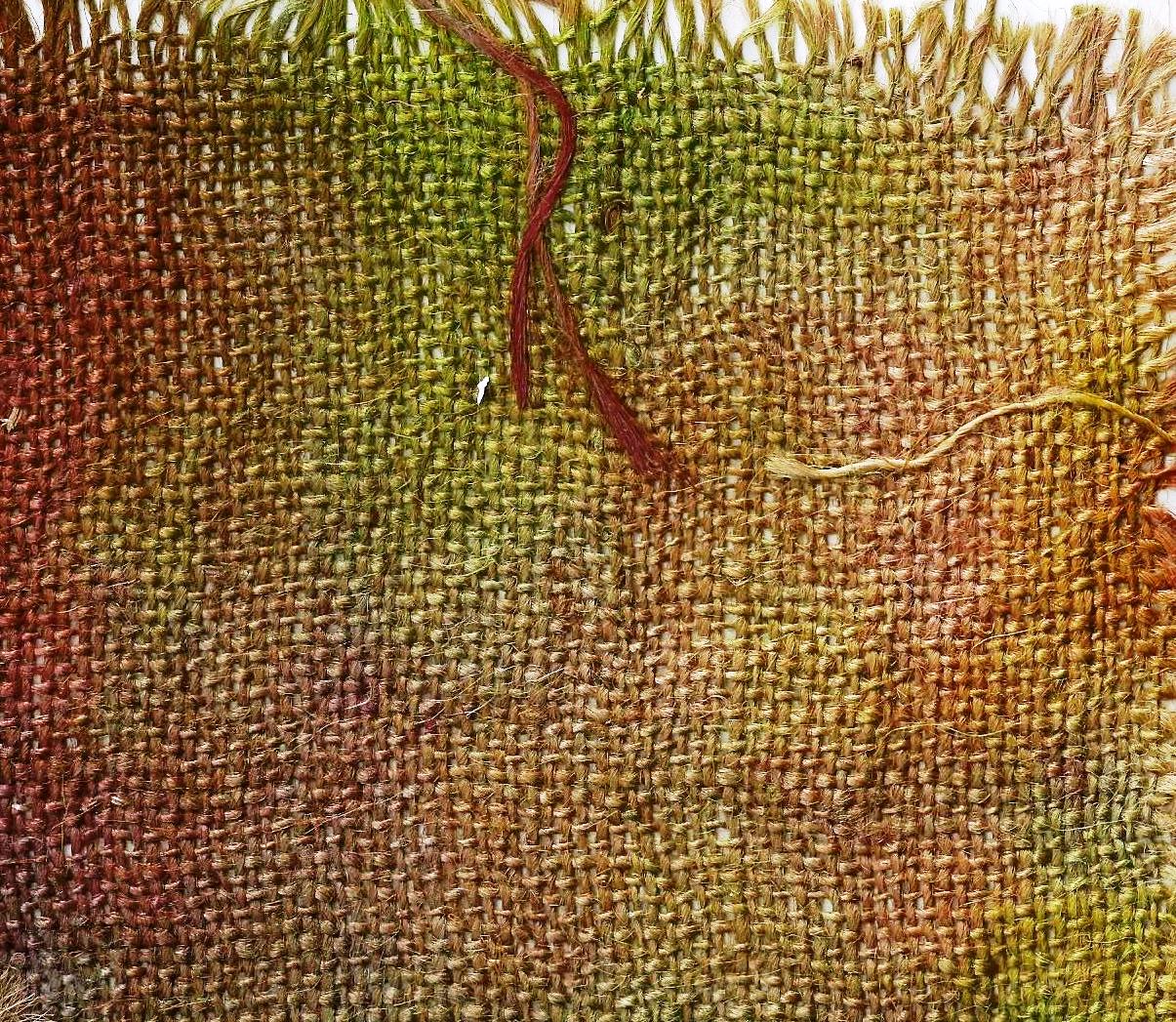 |
Ref 4.6.2 Moving on from the dyed yellow cotton I decided to pick a looser, bulker structure of fabric. Taking advantage of a friends dyeing session with procion dyes the following happened...an overwhelming green and pink. While pleased with the fabrics that came from the session I was concerned that they were not in this modules chosen theme, however made the decision to use the hessian as I wanted to experiment on the looser weave!


Ref 4.6.3 Ref 4.6.4
The diagonal stitching on bars sample, 4.6.3, shows threads that were dyed in the procion session, string, perle,cotton ribbon and strips of fabric.
In 4.6.4 diagonal stitching on cross sections shows variegated perle threads being used

 Introducing machine stitching into the next two samples, tucks being held with hand stitches in 4.6.5, left . Dyed string being used to connect the machine caught threads in 4.6.6, right. For me this piece had a look of the Arbroath Declaration about it, see 4.2.3.
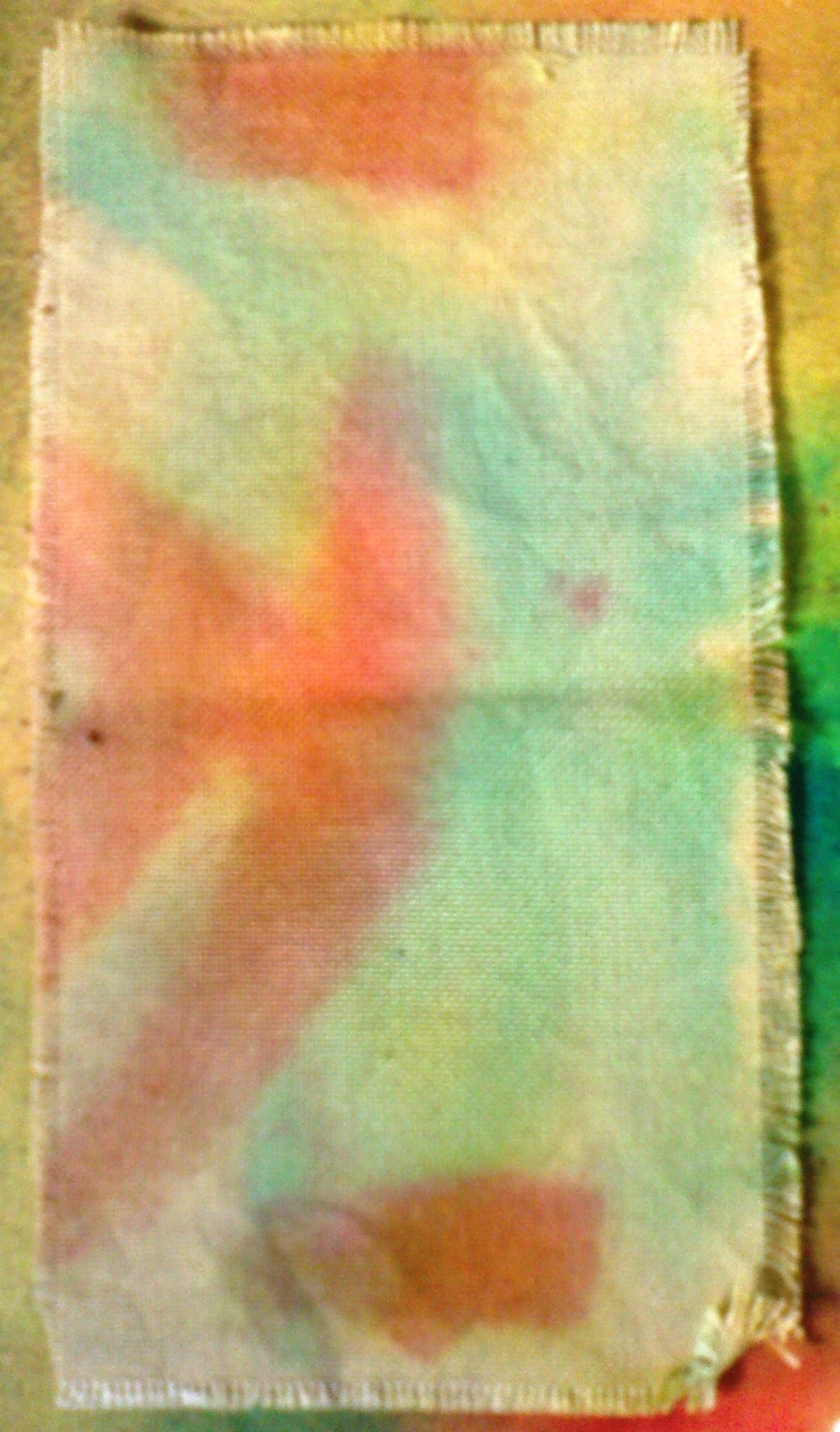
 Having gone off piste thought it was time to return to a more charted territory and dyed some even weave cotton fabric with Brusho dye. While painting a large piece of fabric, to allow me to obtain longer threads, I tried to ensure interesting blocks or strokes of colour where on pieces that would provide the base for combining more hand and machine stitching. Ref 4.6.7, on right was an exercise in diagonal step machine stitching which proved problematic and uneven. Pulling out threads and then enclosing the remaining threads was difficult and at one point the title for this piece was - 'when you are in a hole stop digging'. But, not for the first time I persisted! I often find that lessons that stay in our mind are where you struggle and this would be a classic. Lesson one: pull out a very even grid, lesson two: make the width of columns to be stitched of a size that the zigzag stitch will cover. lesson three: Increase tension on stitch, lesson four: diagonal means alternate steps, and before filling the page with lessons oversewing doesn't make it better!
Ref 4.6.8 Ref 4.6.9a


Ref 4.6.9b mounted