Showing posts with label design elements. Show all posts

Monday, 2 February 2015

Chapter 10 Converting your design into embroidery

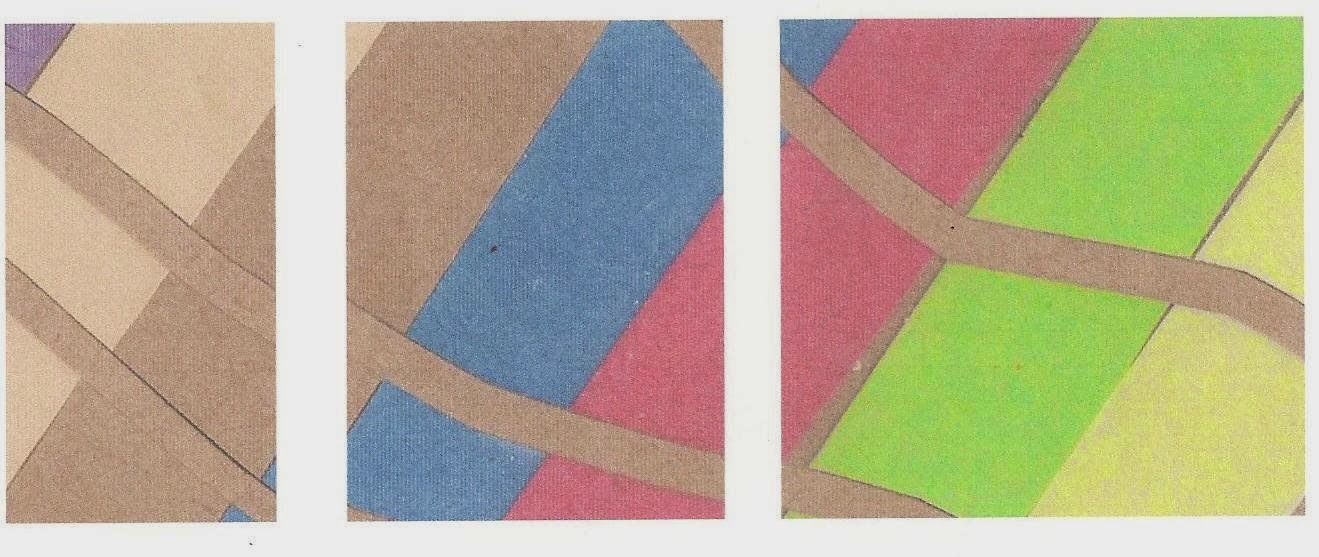
Before converting some key paper designs into embroideries there was a need to consider how to enlarge the small sequences into a much larger piece.  The thought of a piece being A1 was somewhat intimidating, as was the idea of how this could be housed at home or in an exhibition.  The idea of doing three panels had evolved from the last sequence in Chapter 9, shown above left.  Sian's input on developing the idea, see top right, seemed to help solve the problem. First thoughts considered layout 6.10.1 as It seemed to offer the idea of distance.... but  perhaps it would be better to be sized up and allow the design tell the story! It could always be cut back! I played with shapes and a sequence 10.2.
Ref 6.10.1
Ref 6.10.2
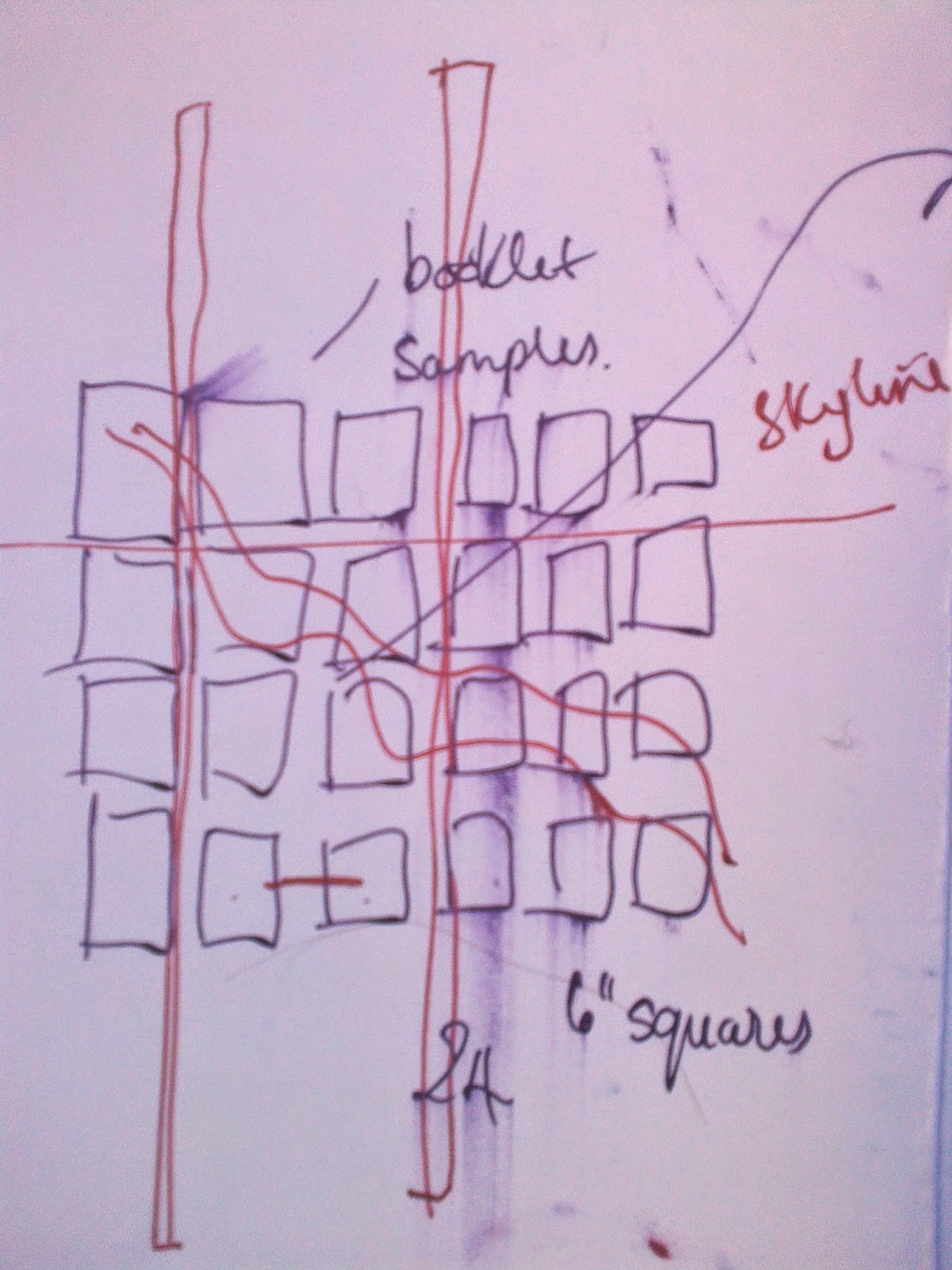
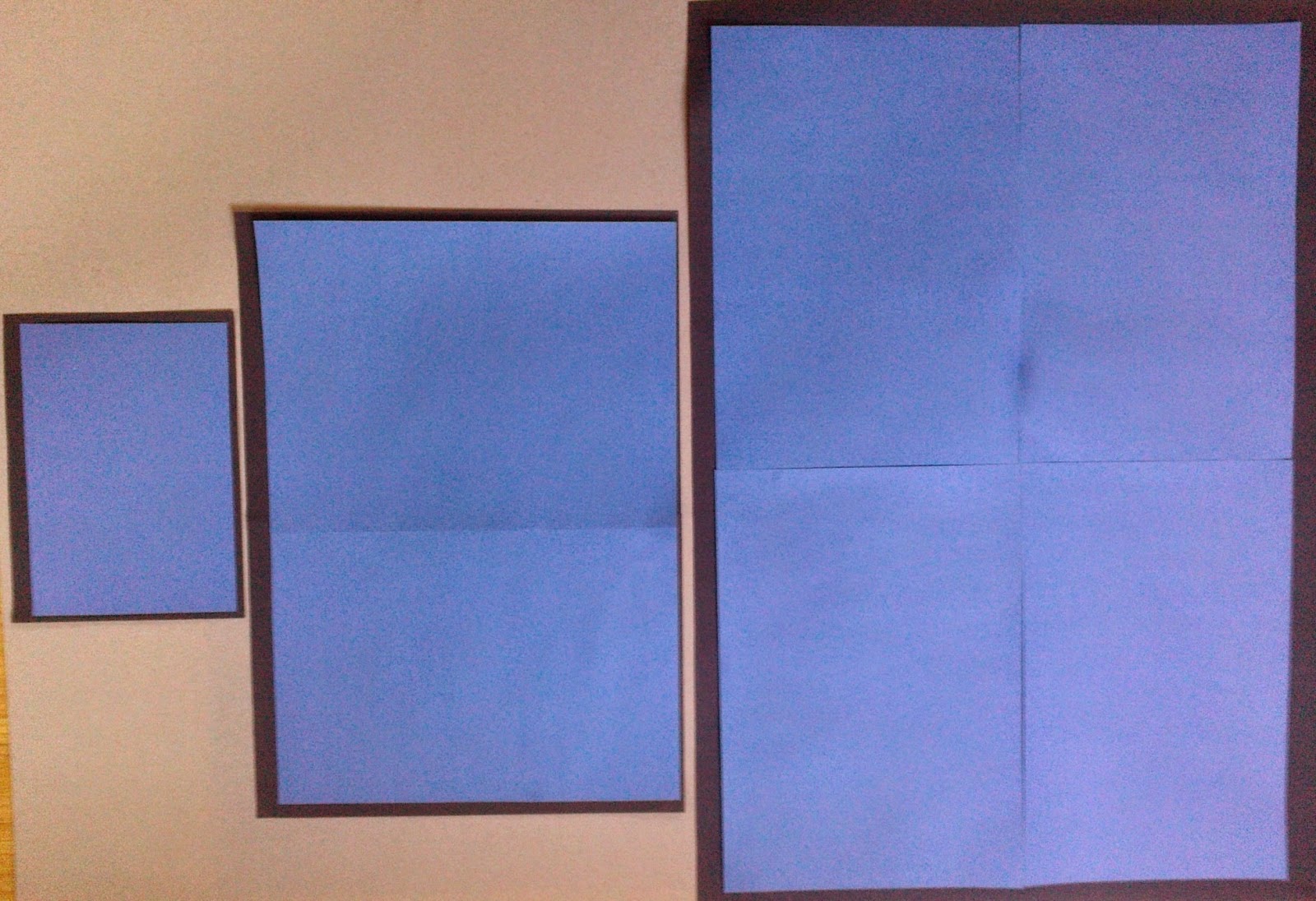
Establishing the dimensions the panels would need to be I made full size cardboard story boards: 6" x 25", 12" x 25" and 18" x 25". Had thoughts of building up the layers over the three section starting with just one layer for the left panel.


Ref 6.10.3
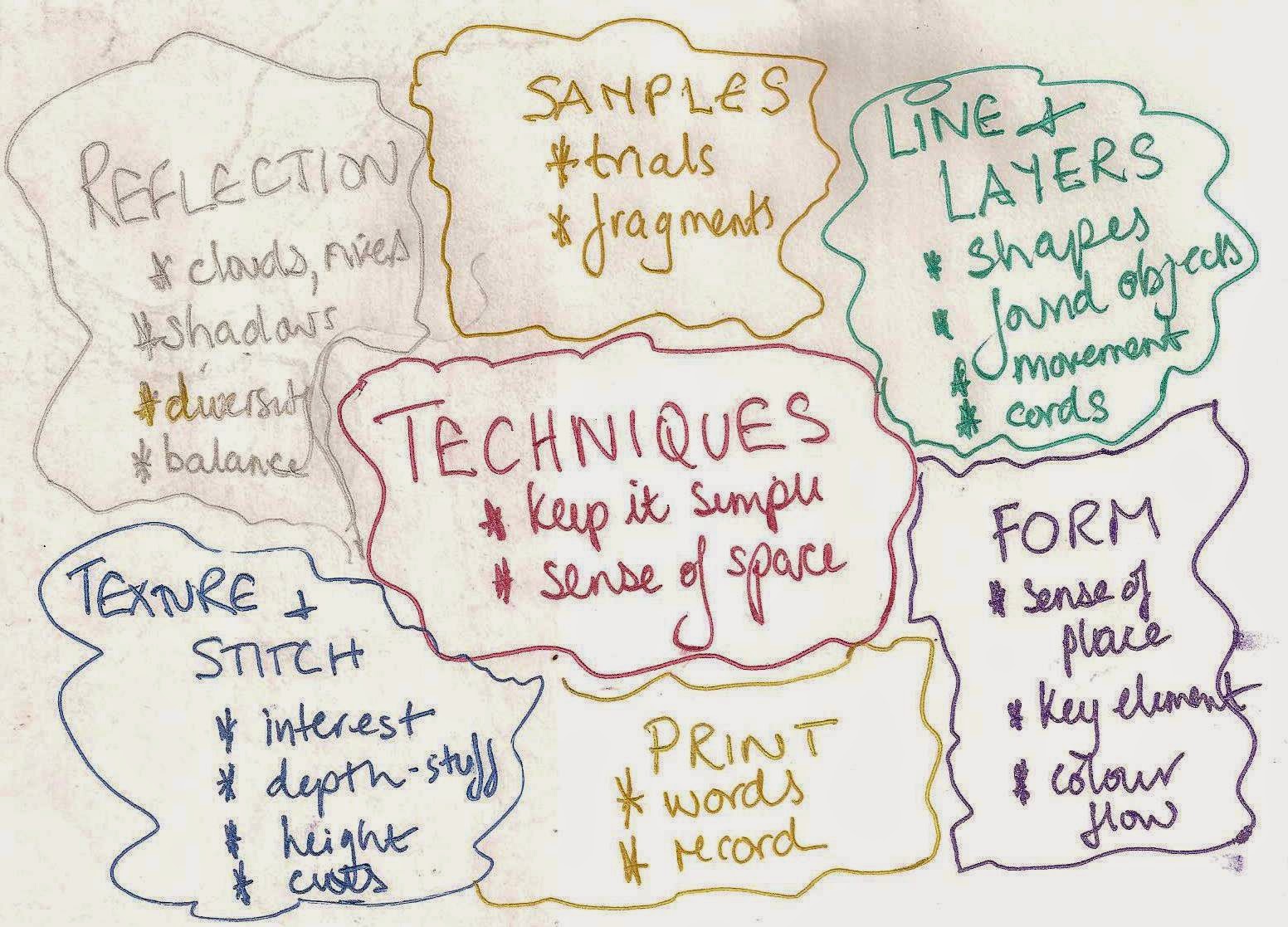
A mind map was made to help keep me on track, 10.3 but when you read keep it simple in the middle and then see all the writing in the bubbles this would be a key task. 
As a result decided to just take stock of previous modules and suddenly the image  from Module 1 Resolved Sample shouted out at me along side the work of Herta Puls.
Ref 6.10.4a
Ref 6.10.4b
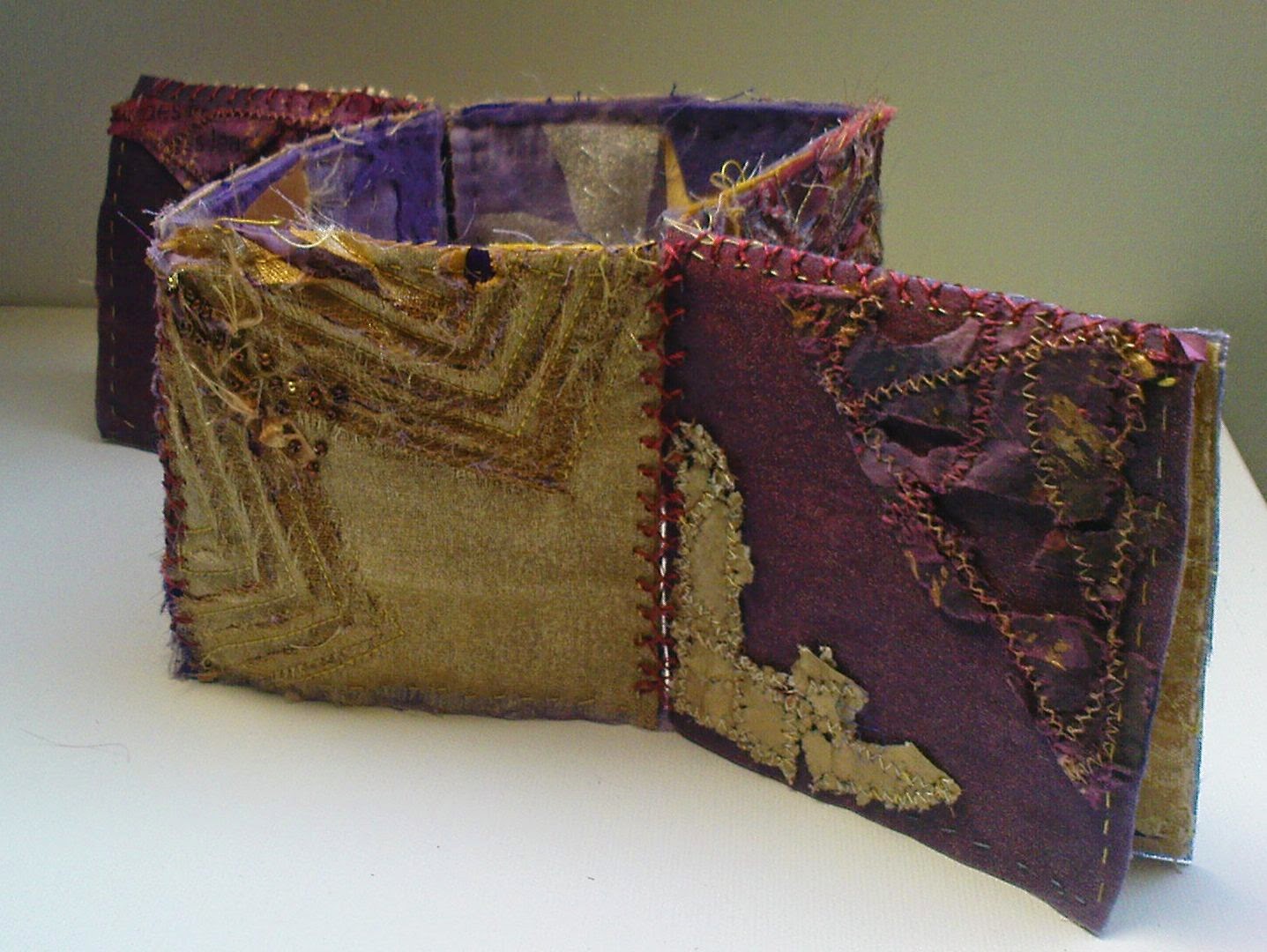
 Could this be both an effective way of building up sequences across the three story boards -6 inch squares would translate into the scale I wanted to use? It seemed to offer a fluid but stable background to link  layers, shapes and colours across the three sections as shown in 10.2. Other aspects gave it merit, flexible,
Ref 6.10.4c

Ref 6.10.5
interchangeable - could the back be worked in a different tones and turned to provide areas of contrast or allow the piece be shown as a three dimensional piece as in 10.4c... the list went on! Before getting to carried away with structure lets get back on course...but here's the first signs of smudged excitement in 10.5!
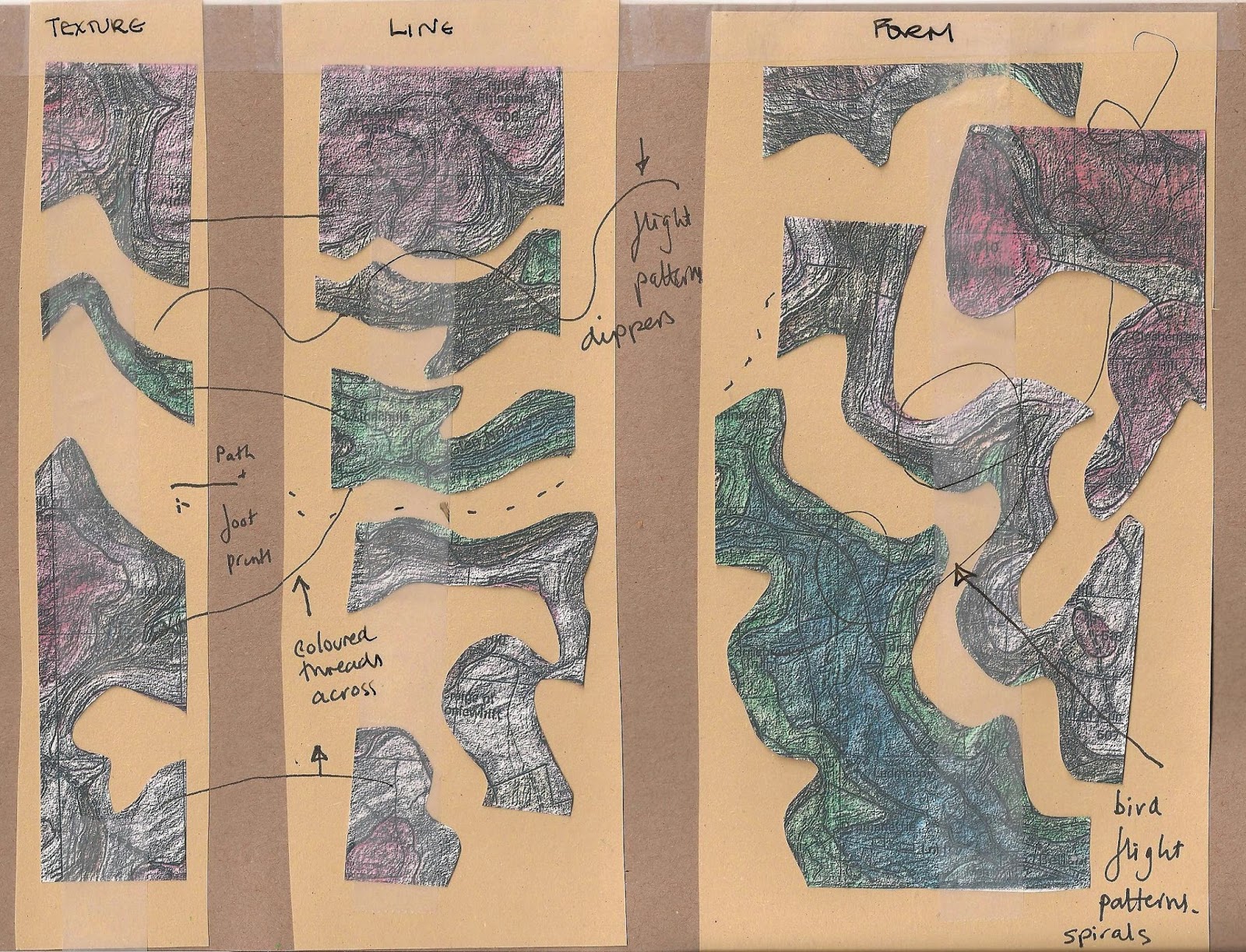
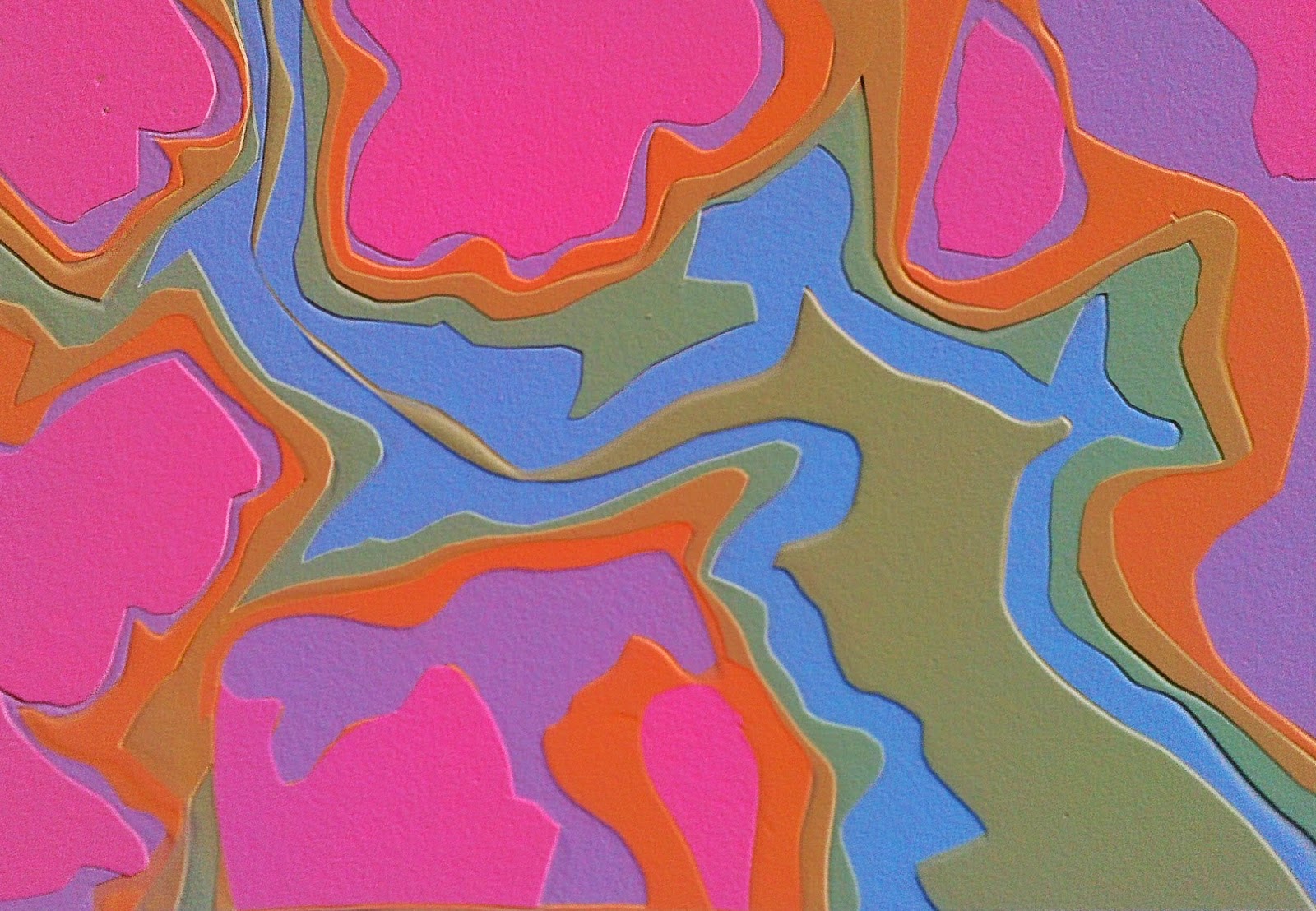
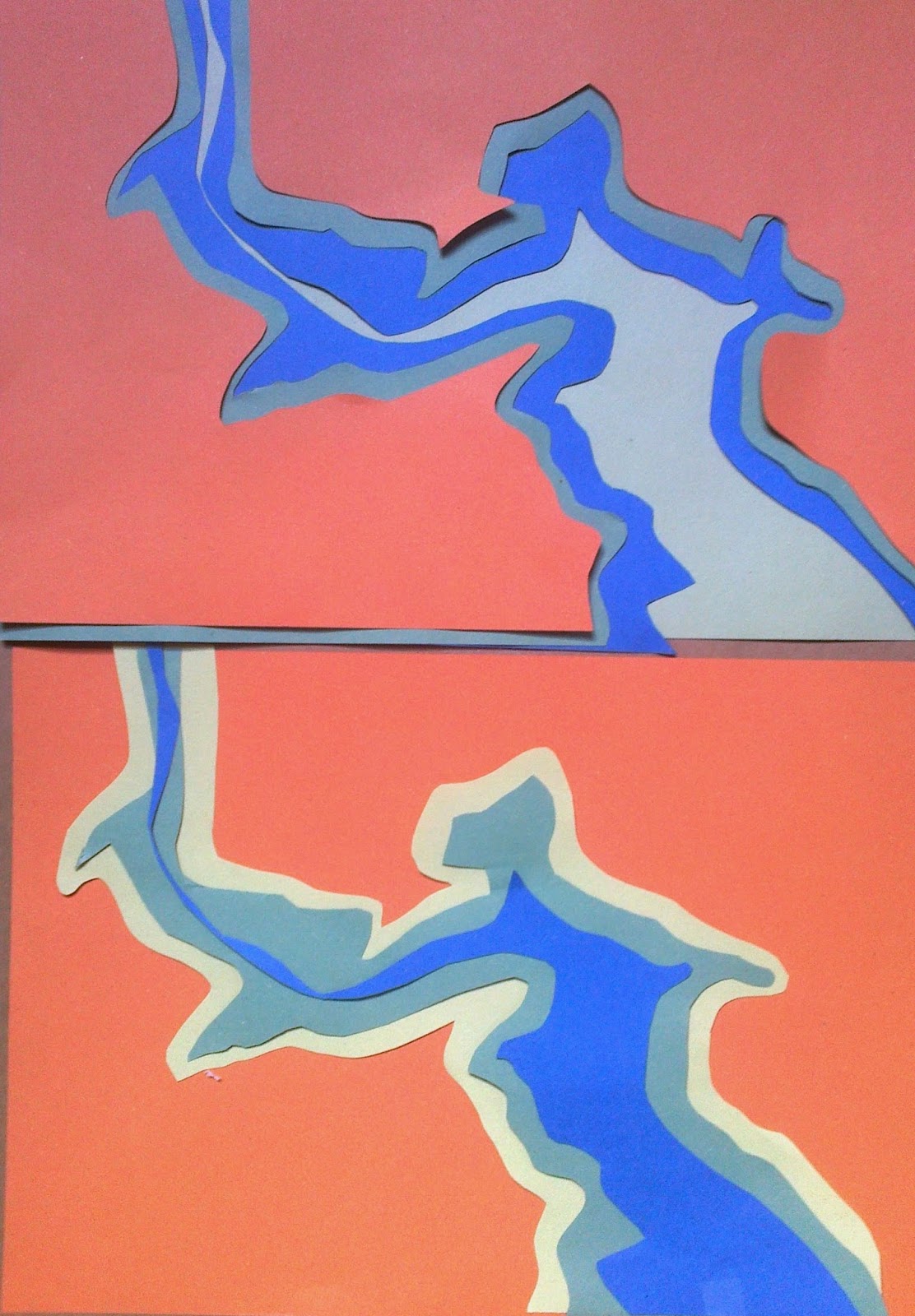
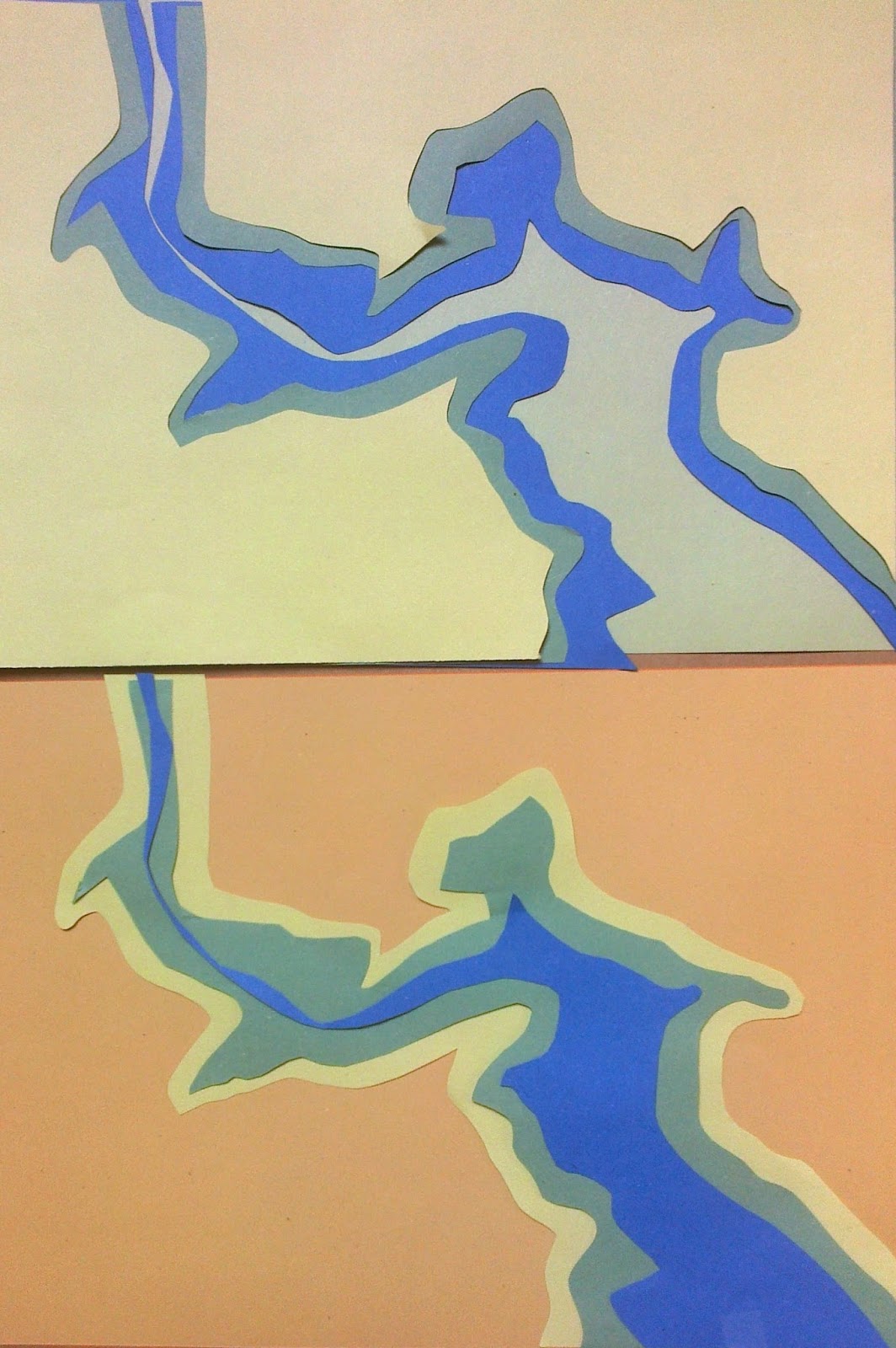
Playing with shapes from my trips in the Glen and the lie of the foothills of the Cairngorms my camera allowed me to consider embossing and solarising images.  
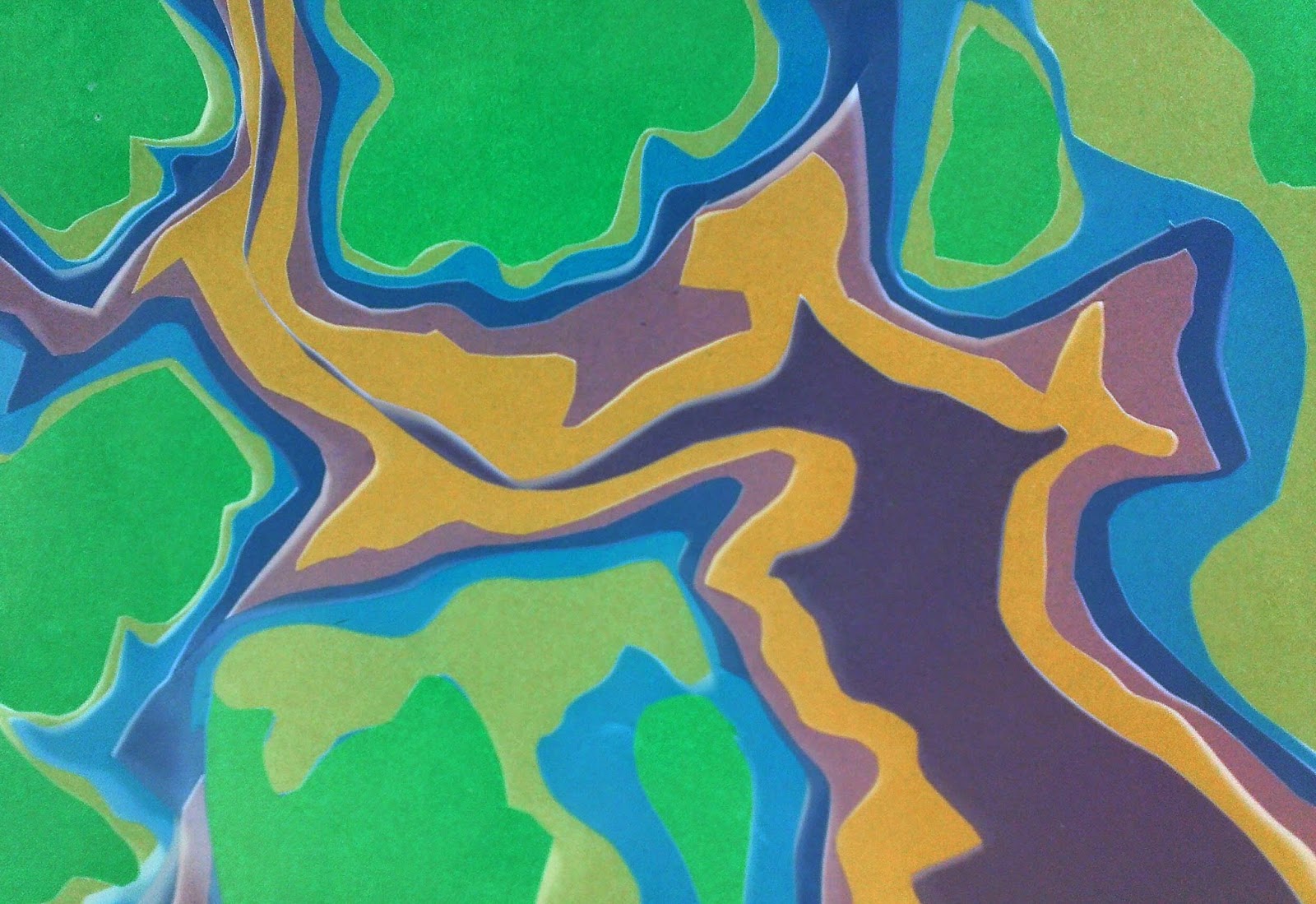
Ref 6.10.6a
Ref 6.10.6b
The decision on shapes would help me focus on how to translate samples of fabric manipulation and stitch into my Chapter 11 sample border and then my larger final piece.  These initial samples seemed too busy and distracting so pruned back to a more simple outline. These pictures made me think of thermo imaging  and  looked at a website were animals have been recorded and the fact that a colour code is also used for how endangered various species are in our area. http://www.veterinary-thermal-imaging.com.
Played around and came up with this image which is perhaps a step too far!
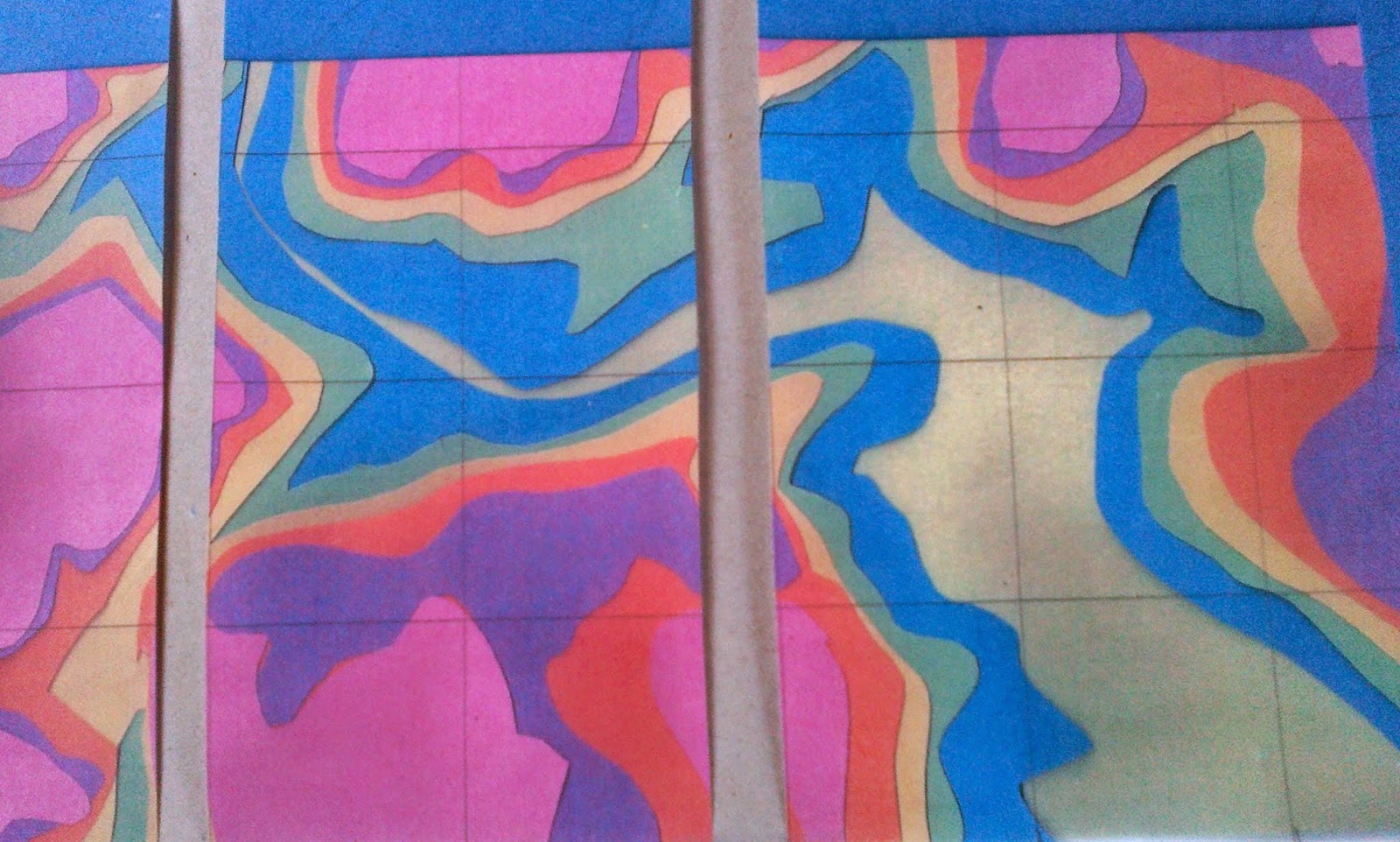
Ref 6.10.6c


Ref 6.10.6d
Ref 6.10.6e
I became intrigued by the image which seemed to place a 'human' figure in the centre of the picture.  It had started when a friend I met on a walk into the glen mused  that the  Water of Nochty could have once been a loch in 'earlier' days! Now there's a challenging thought.


Ref 6.10.7a
Ref 6.10.7

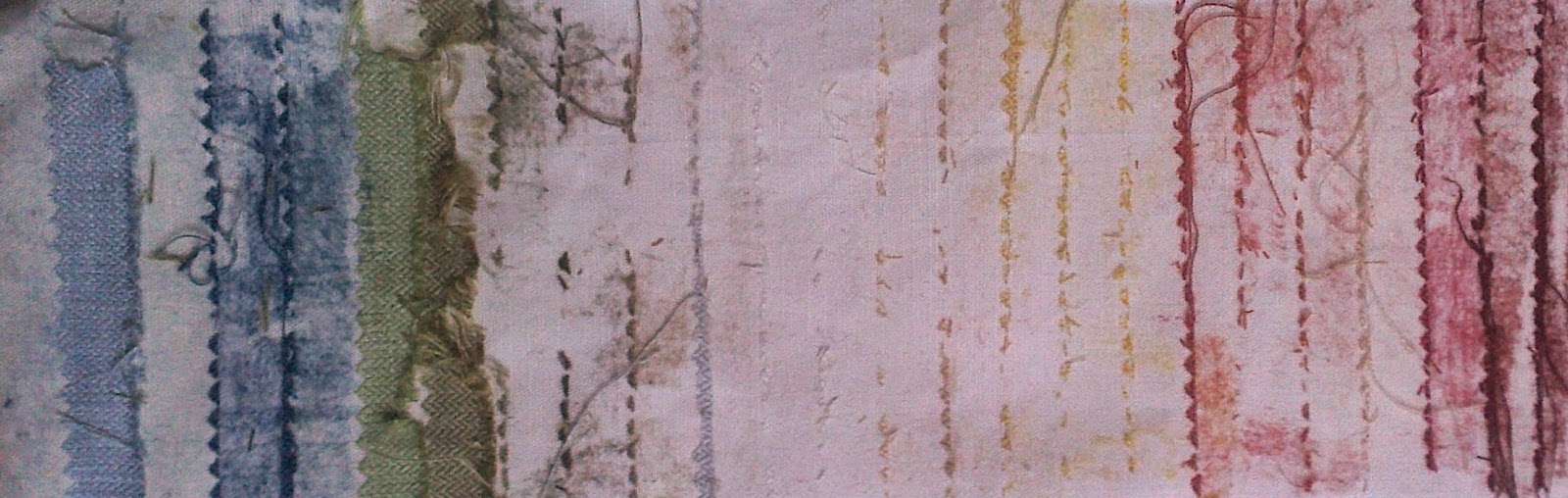
There were still decisions to be made on colour choice, this sample card,10.7 , of the backing to pieces from a fabric shop was on my board but needed to consider tones and highlights. Included the brusho ink colours I had used for making papers as a reference point.
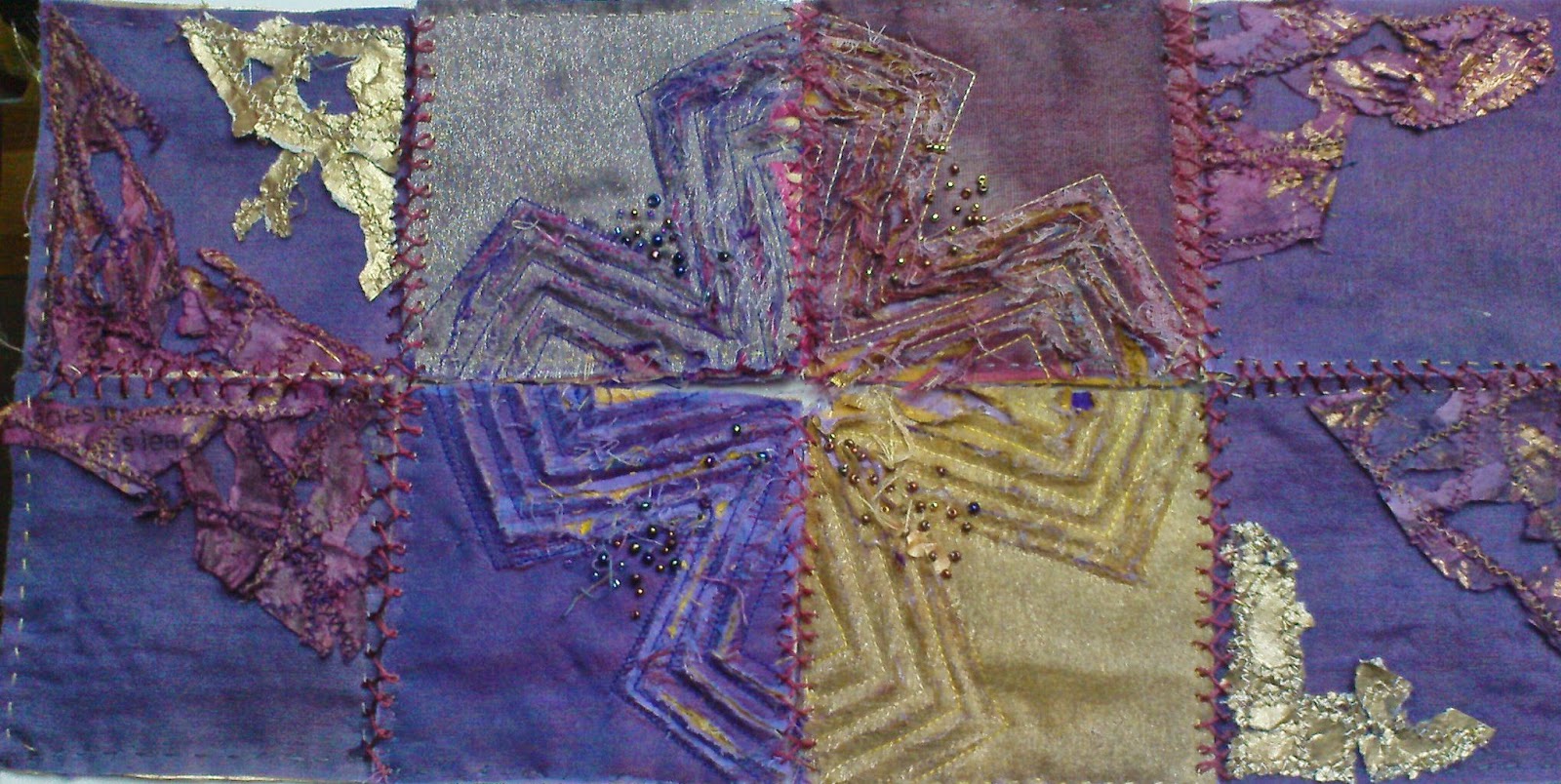
 But  now down to ripples and spirals, the chosen shapes from Chapter 9. These seemed to offer not only an answer to giving the essential nature of the place I had chosen but also gave scope to explore biodiversity, the  conservation theme chosen. 
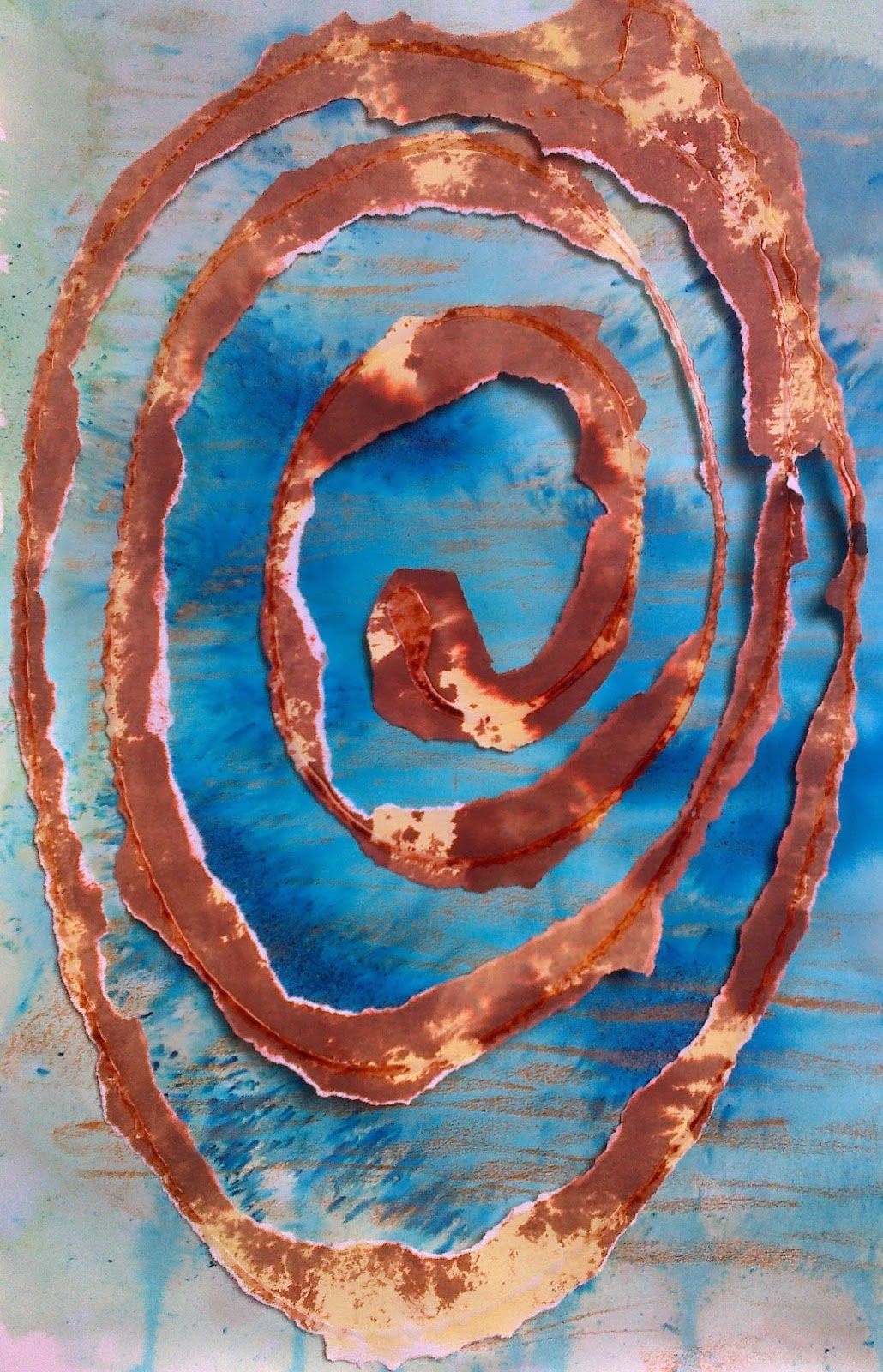
Ref 6.10.8
With reminders put on a story board for each panel I set out  to review previous samples that could translate these themes from Chapters 5, 7 and 8 .  While the colours may not be appropriate for the final piece these previous samples offered a starting point to reworking the paper design 10.8.
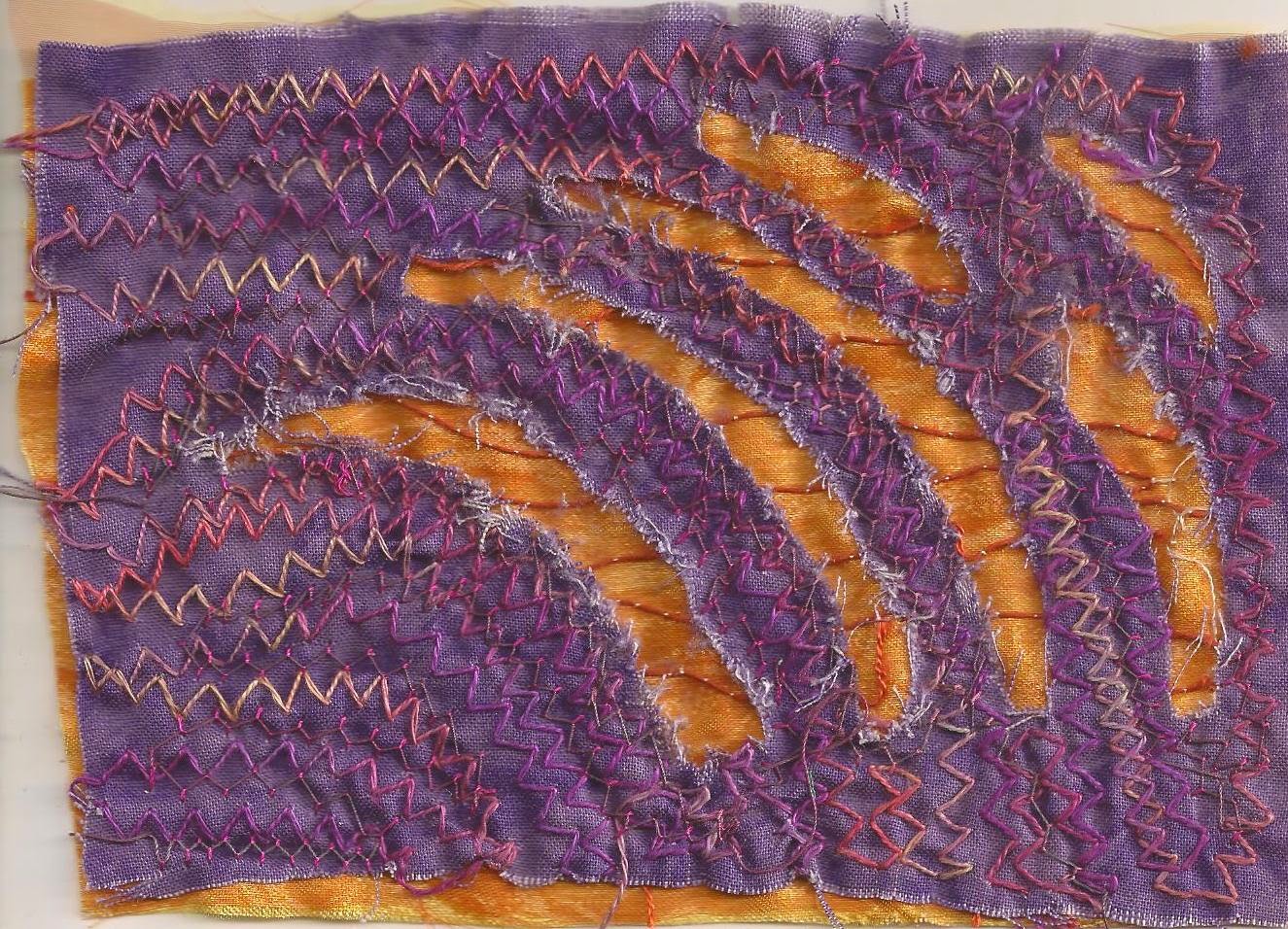
Ref 6.10.8a
Spirals:
Ref 6.10.8c
Ref 6.10.8d
Ref 6.10.8b
While looking through the samples and thinking of how they would translate up in size  decided my samples for this chapter should be made up in a larger scale than these originals ones so that I could see a comparison of what technique worked best.
Sample 8d was put in to remind me to consider 'a flight' above the finished piece as noted in 10.2.


Ref 6.10.9
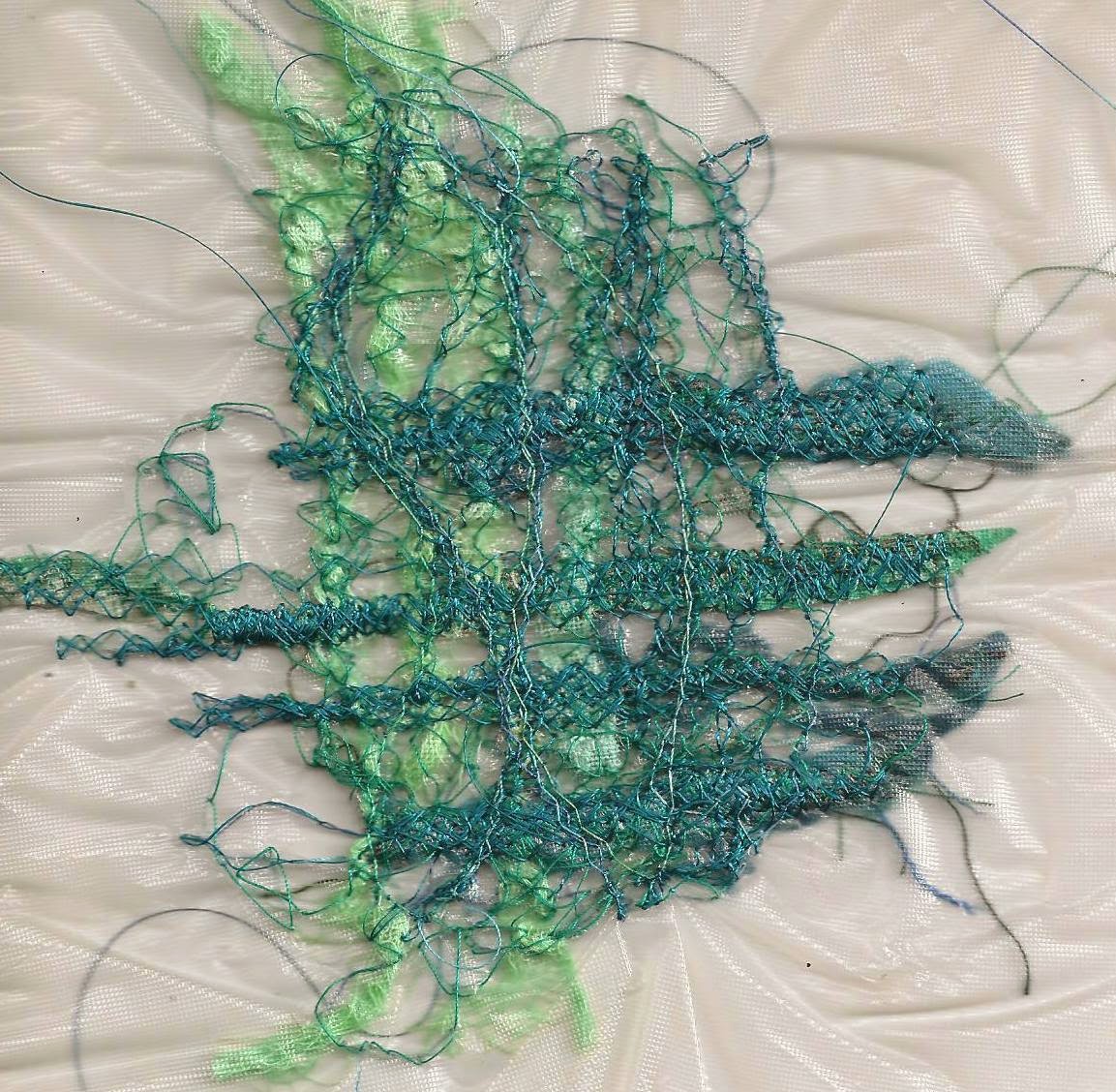
 Ripples: In this selection I felt it was important to consider the part ripples play in reflection
Ref 6.10.9a

Ref 6.10.9b
Ref 6.10.9c
and also consider the other methods of getting texture with fabric weights and different stitching, cording , overlay.   


If these ideas seem worthy of taking forward would play with colours and stitching to take the chapter forward towards Chapter 11.
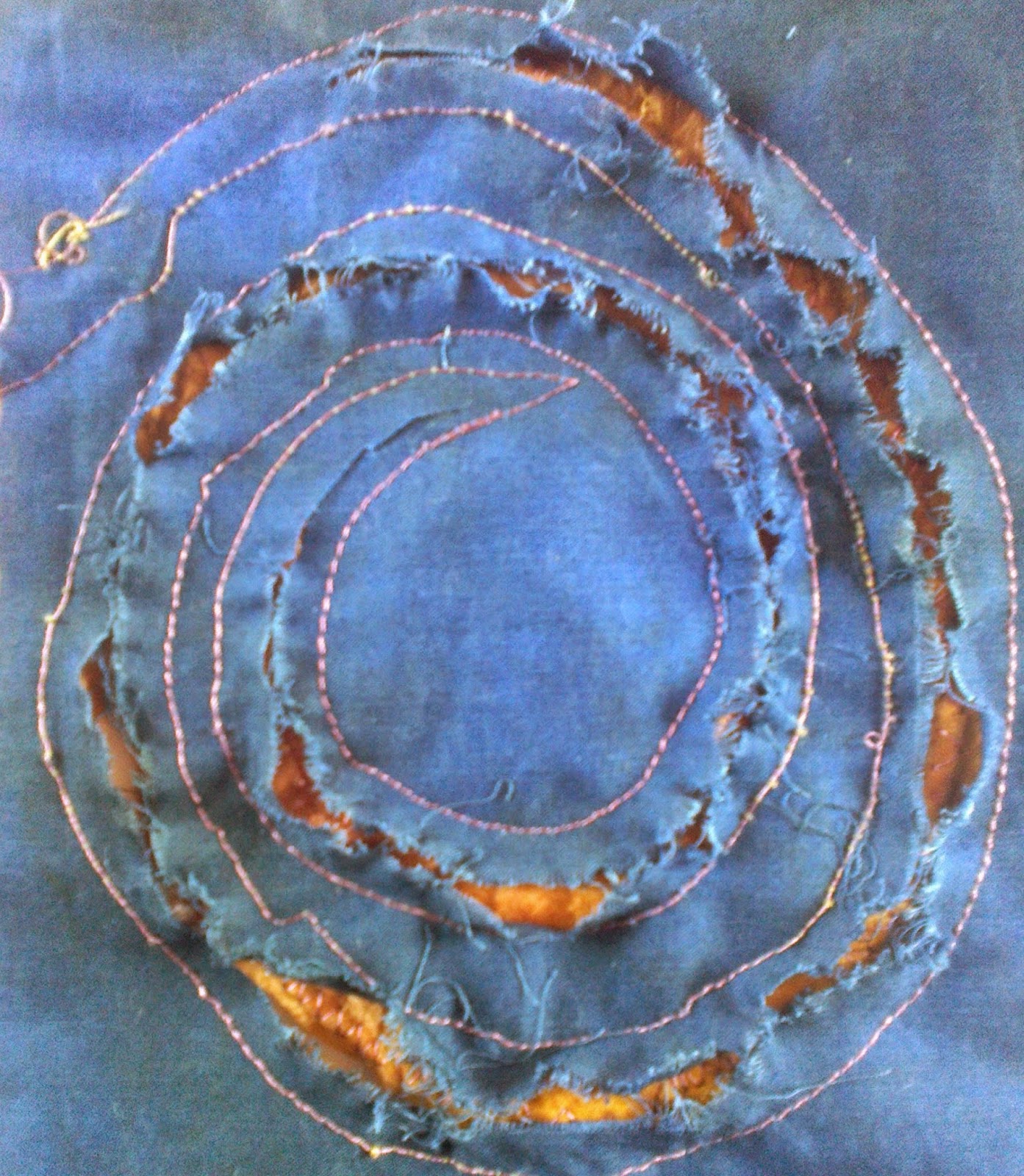
Spirals
Ref 6.10.10c
Ref 6.10.10a
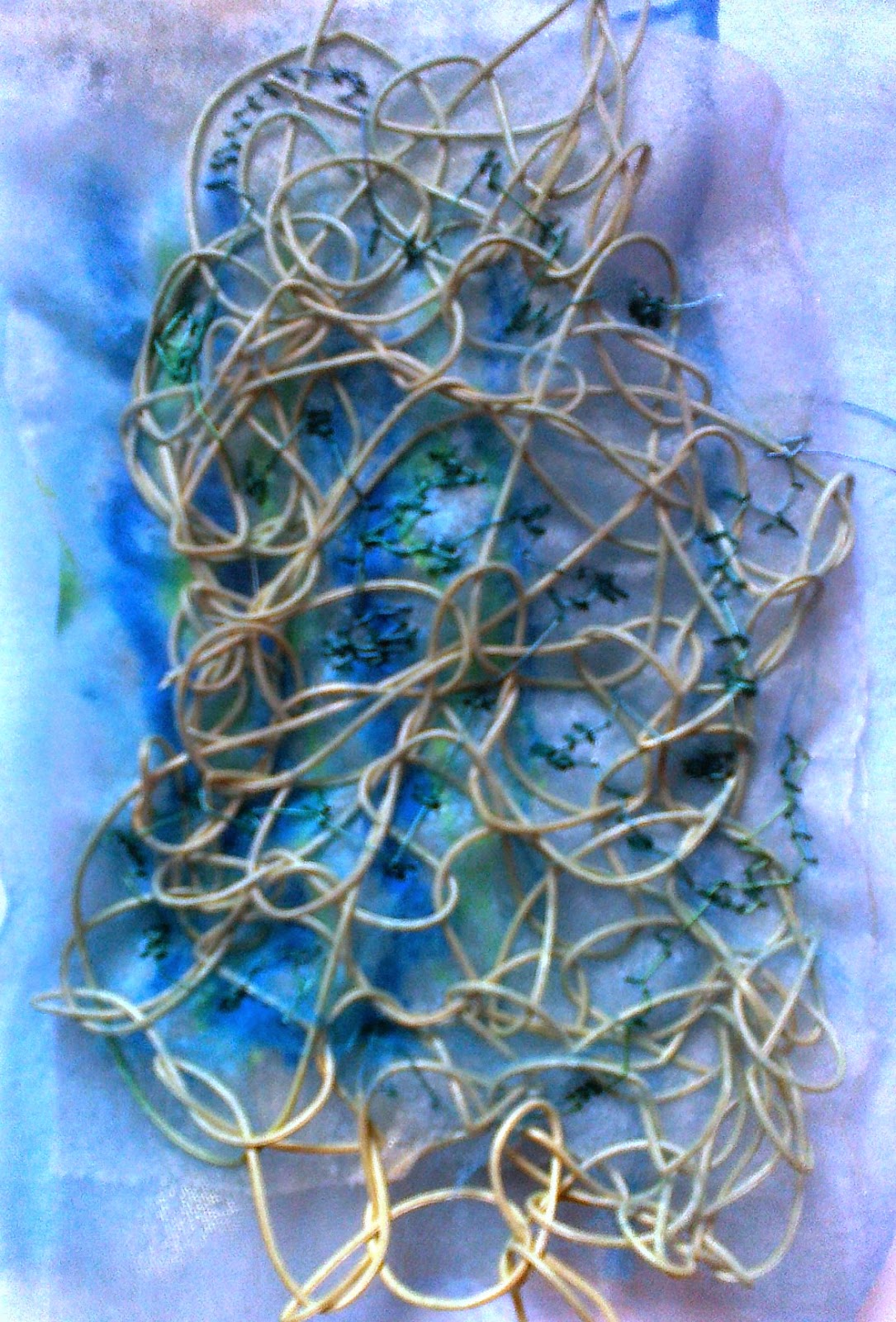
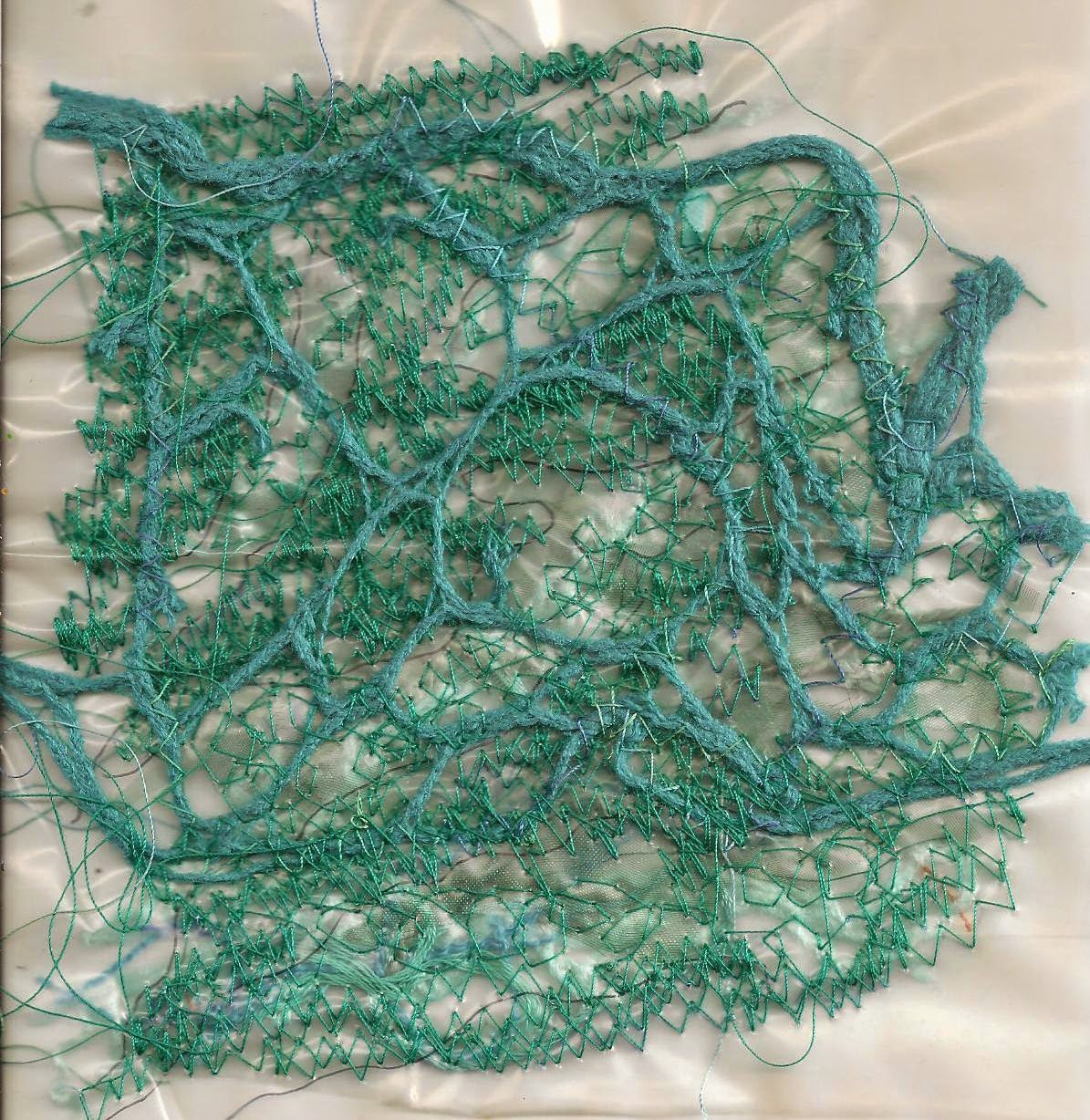
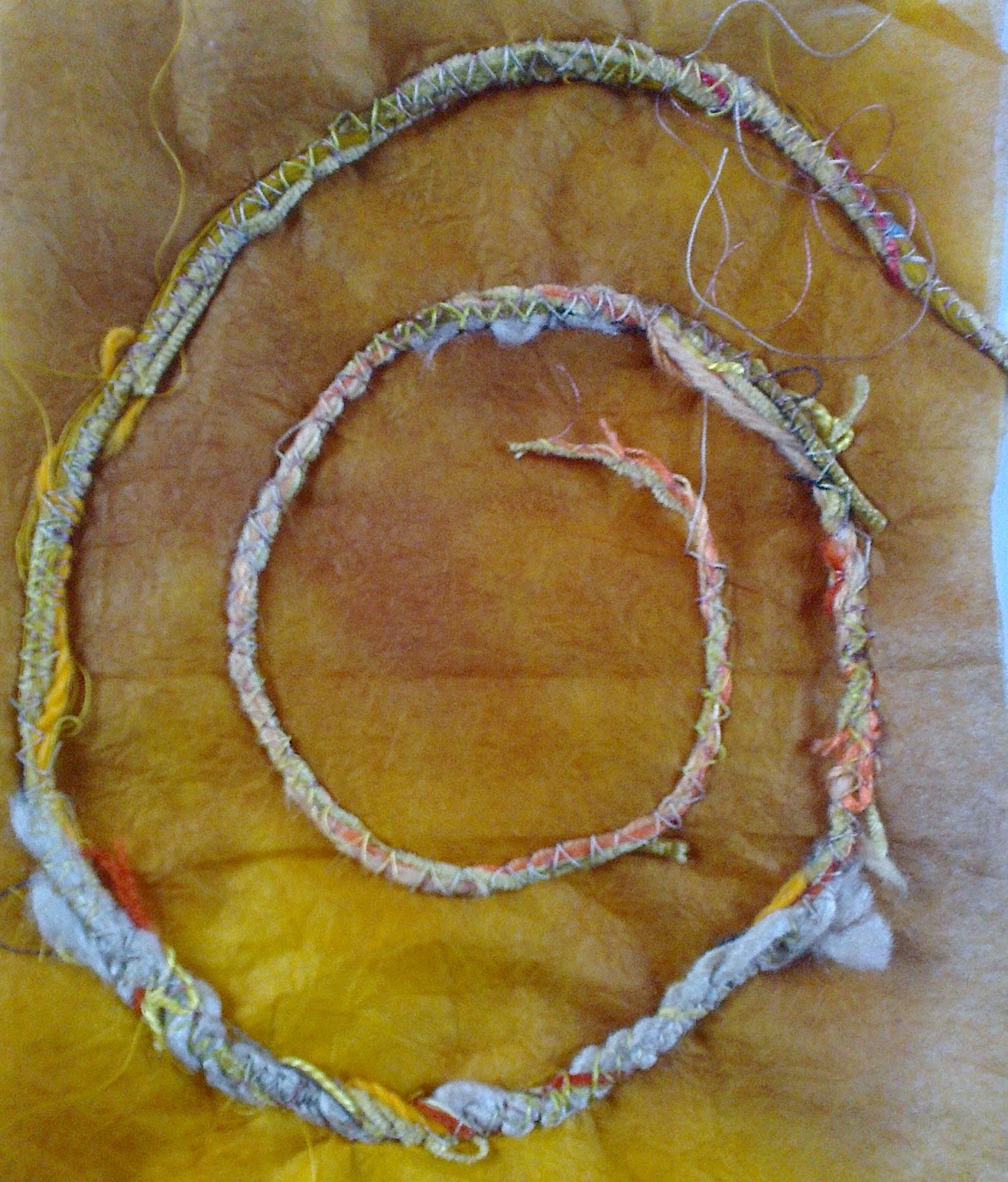
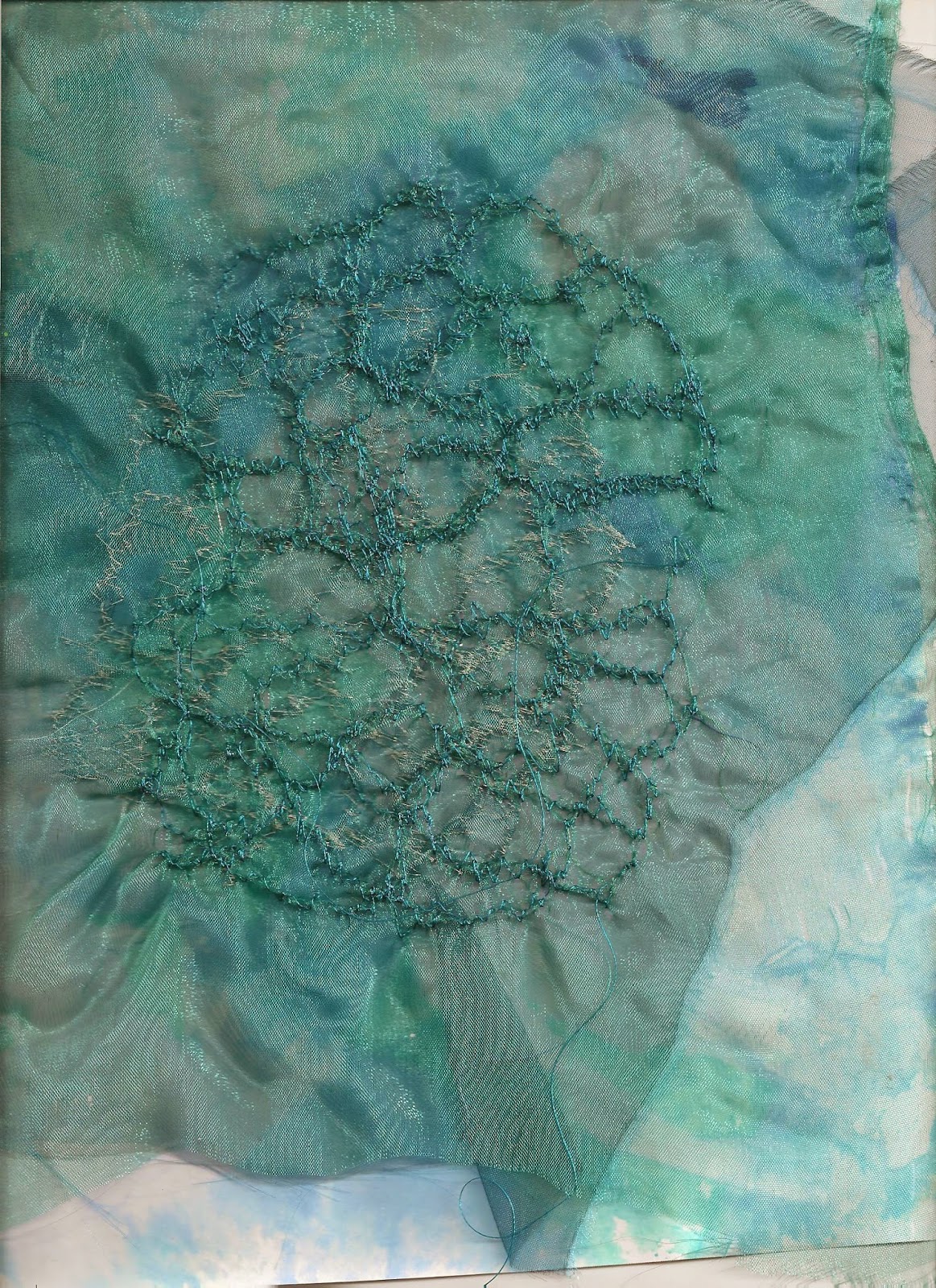
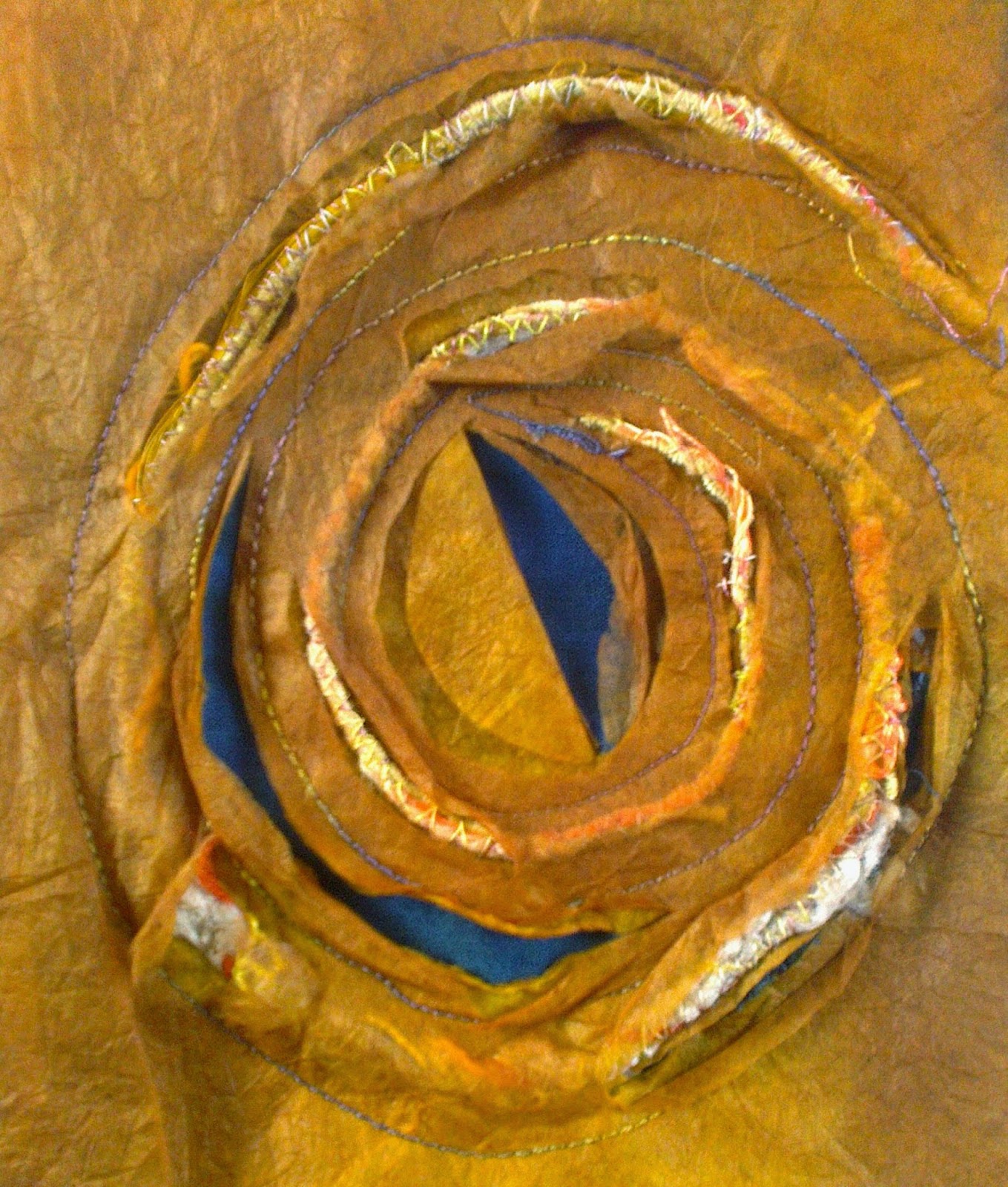
 Making a cord from various weights of thread it was attached to three layers of abacus paper, reversed and then sewn to hand dyed blue/green cotton. I then made random cuts in abacus paper and fabric to reveal  the cord.
Ref 6.10.10b
Ripples

Ref 6.10.11a

Ref 6.10.11b
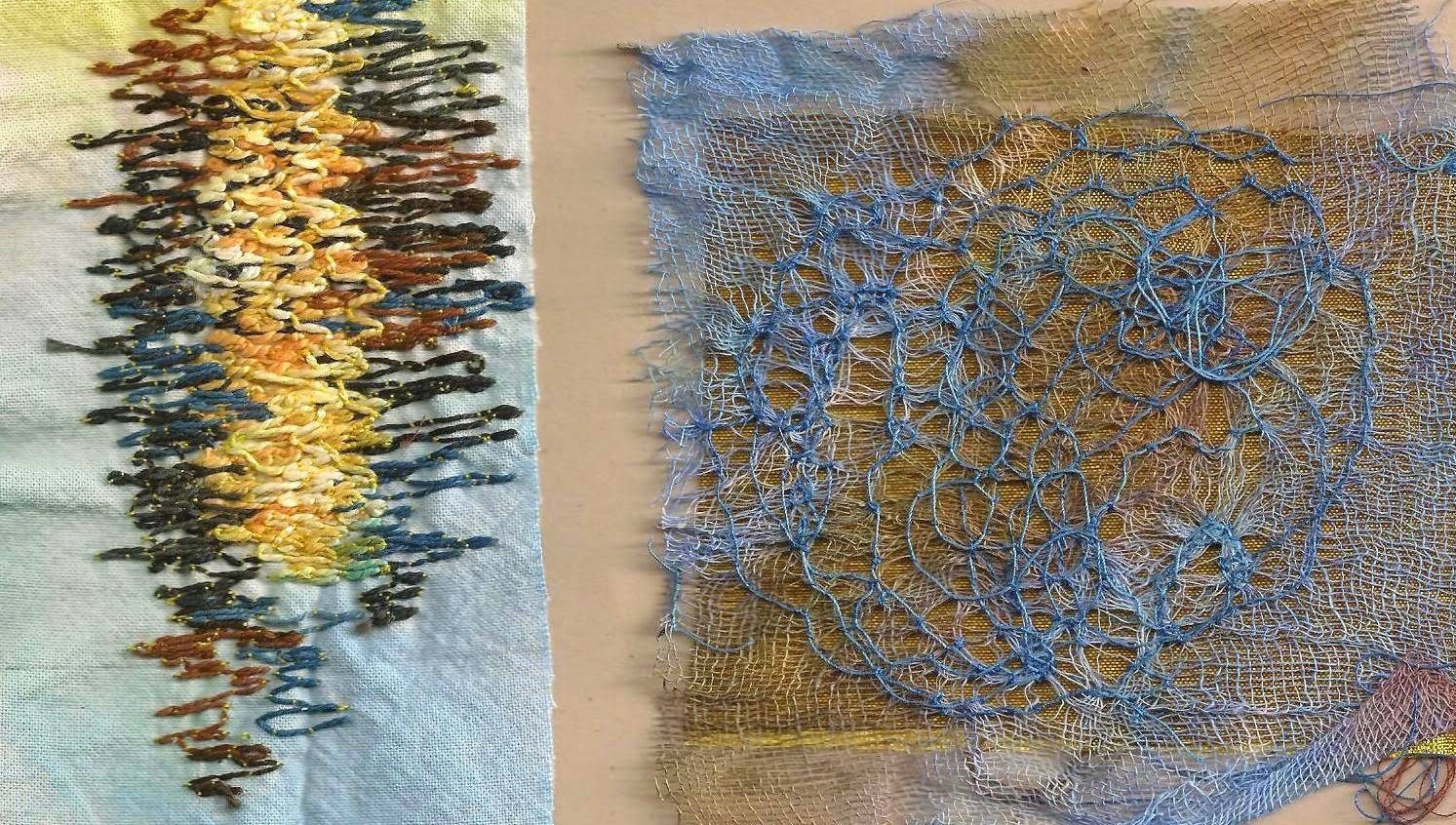
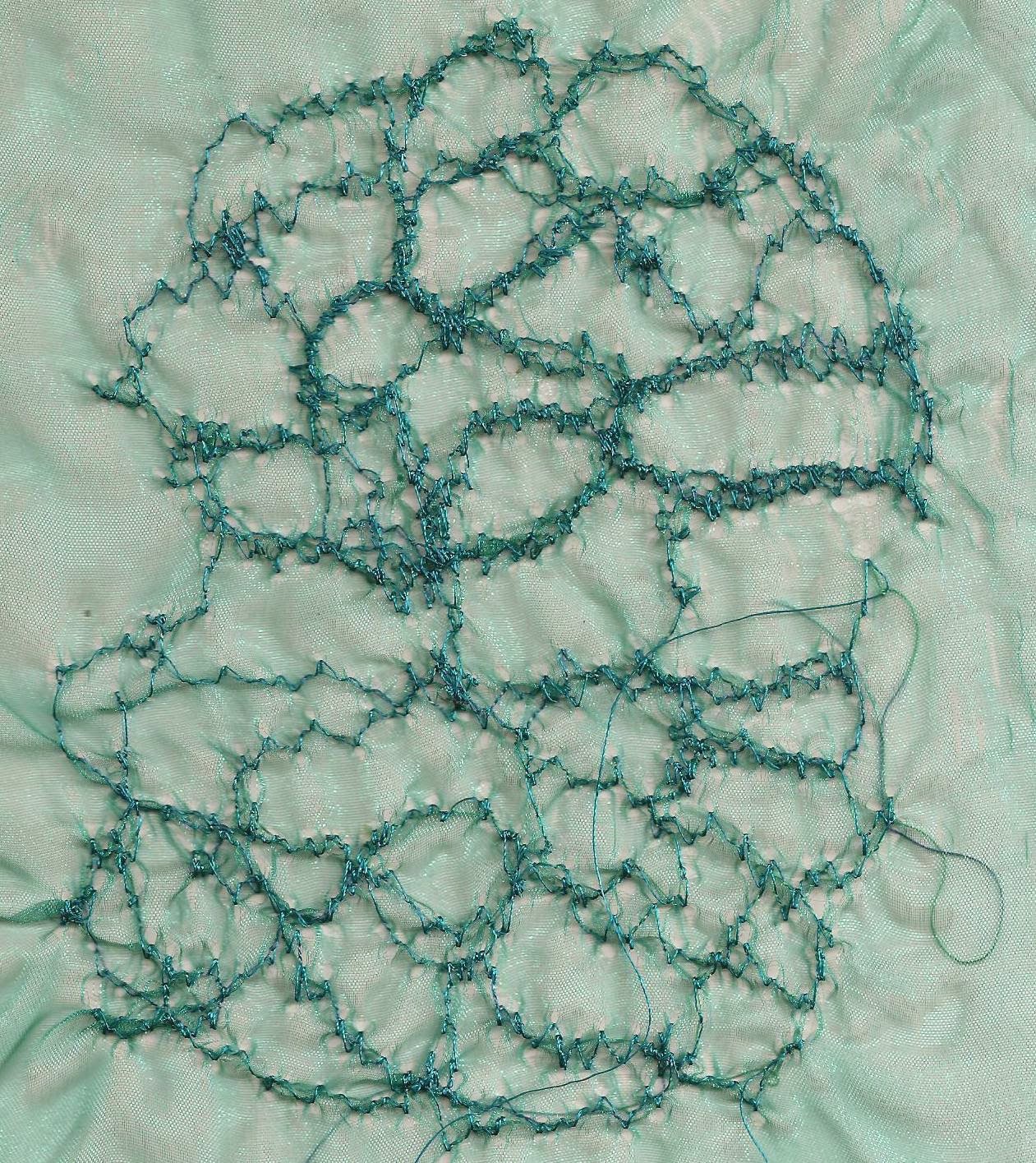
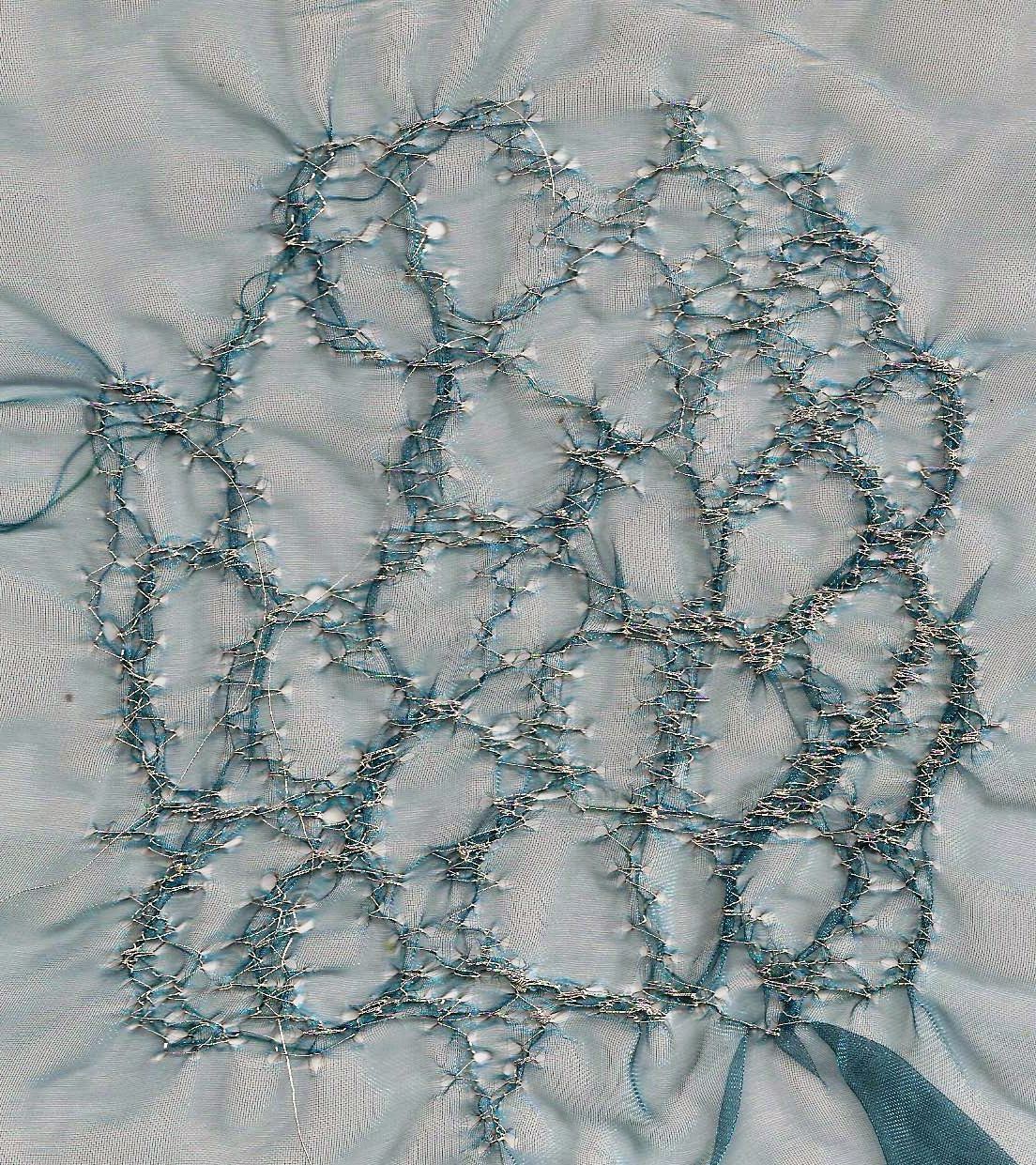
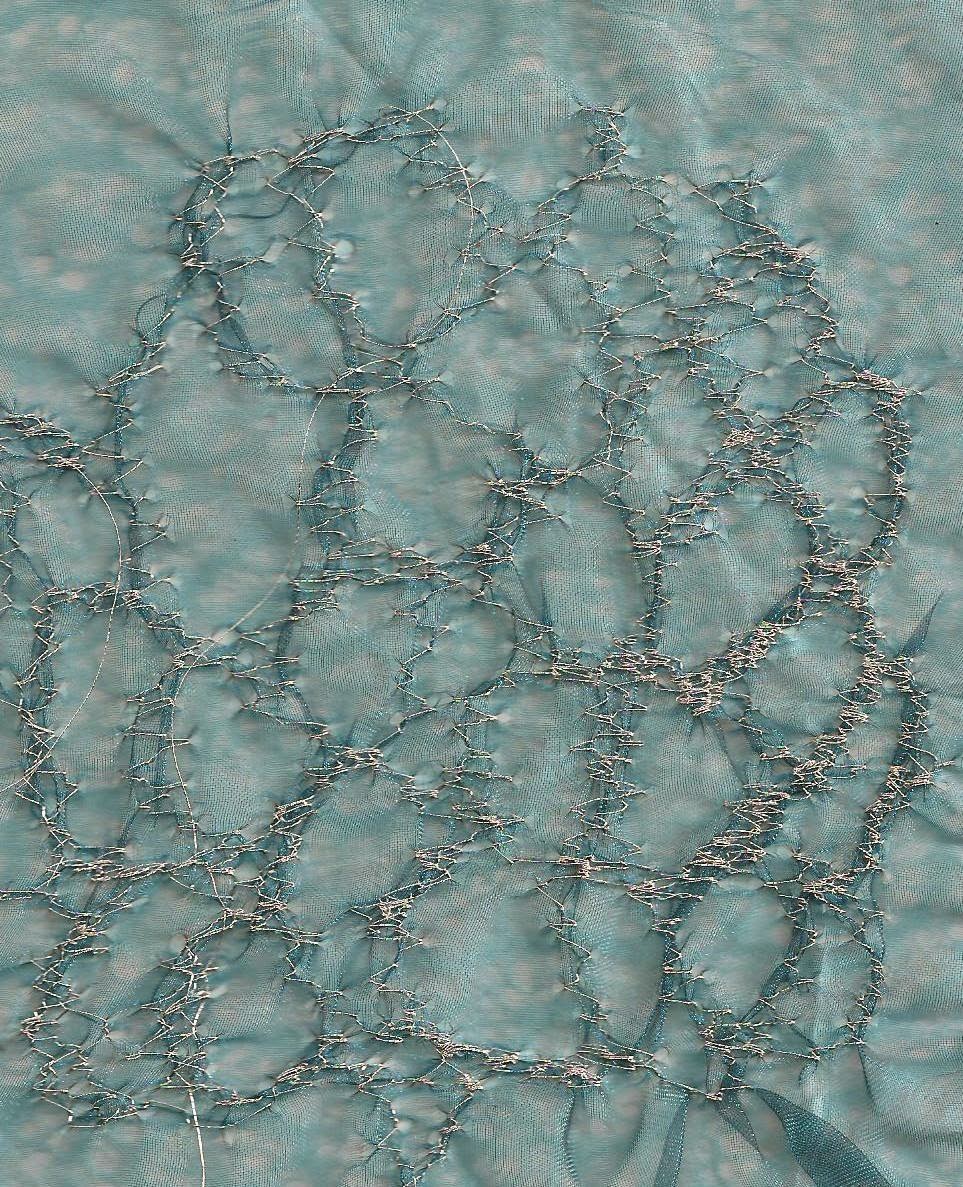
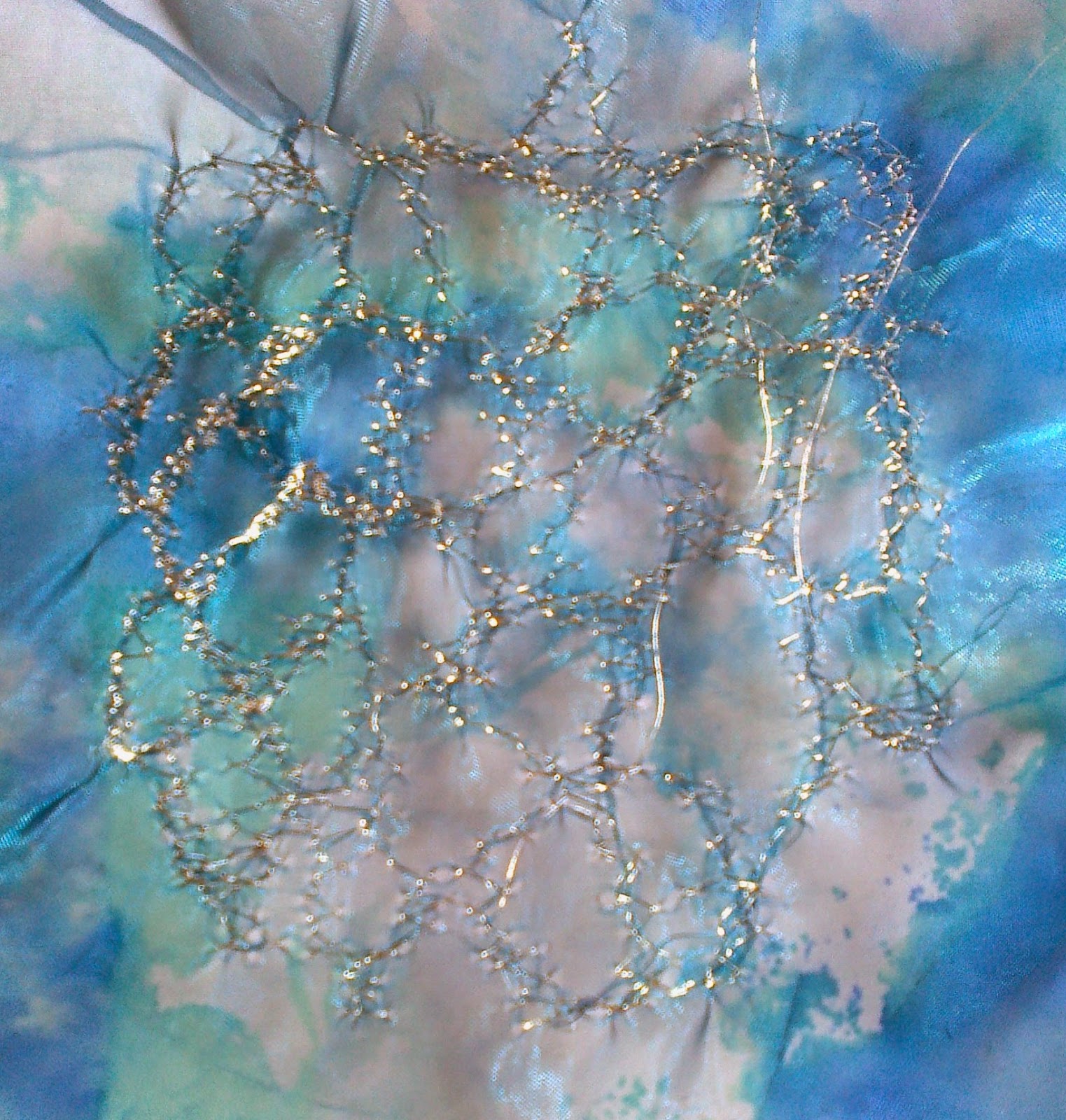
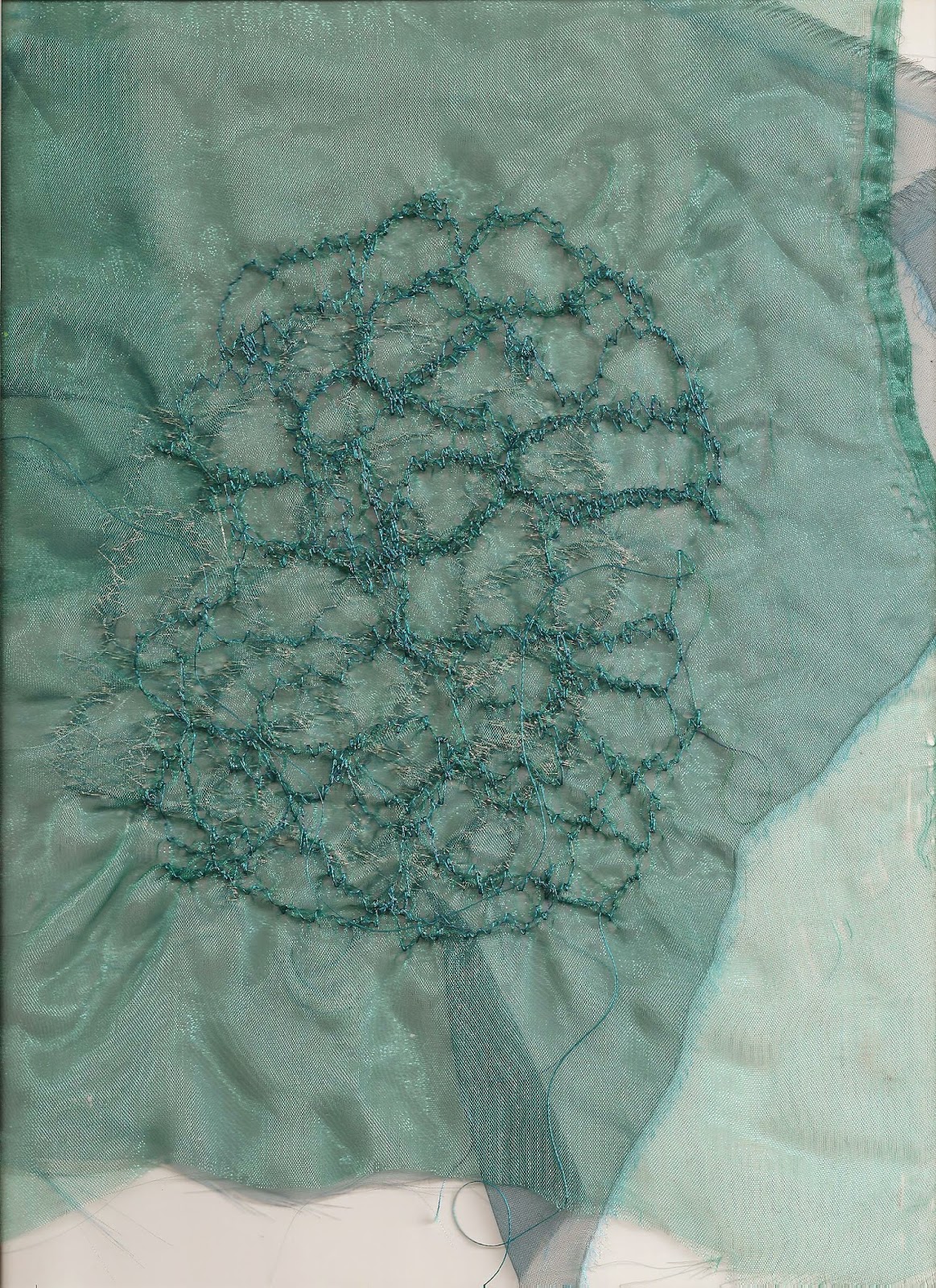
Replicating the ripple template on two shades of nylon chiffon using cotton thread in one and silver thread in the other I then mounted on various papers 
Ref.6.10.11d
Ref 6.10.11c

Ref 6.10.11e
Ref 6.10.11f
 In sample 11e the two sheer fabrics were placed on top of each other.  In looking at these pictures I noted that a fray in the spaces would provide interest


Monday, 4 March 2013

Design an Accessory Part 2 and a bit more

To maintain the momentum of musing over various design elements  and not taking  any one of these in isolation I  set out three workboards.
SHAPE, SIZE, DESIGN
 SOURCE 
Selected three shapes and three designs to play with felt I would see what problems/ practical solutions would be faced in the final piece.  The first design to be tried on each shape was the paisley. 
COLOUR, DETAIL

The colour and detail board, also incorporated references  to Turner's Moonrise, http://www.tate.org.uk/art/artworks/turner-venice-moonrise-d32126 and a book on casalguidi embroidery, Embroidery Techniques, Via Laurie, Search Press. 

Doing the colour and detail board had a play with one of the mask images on gimp:
Ref 3.10.7
The details of the design actual go off the edges of this shape, but I didn't have a steady enough hand to draw those in on the computer! The aim of this image was to consider if the colour changing over the mask would work and whether the idea of using the threads either in soluble fabric or bond a web would be a background option for detail.
Ref 3.10.7a
While not actually completing the process put threads on the soluble fabric ( top) and on bondaweb bottom. Ref 3.10.7b

 By putting the tracing paper over these  pieces could see the colour effect that would be produced. Next stage saw these on the shape by layering in gimp programme                                              Ref 3.10.7c


At least this was a way of reviewing each shape and design before making a decision.  Felt  colours needed to be better graduated across the mask.  My notes of things to consider was getting ever longer! 
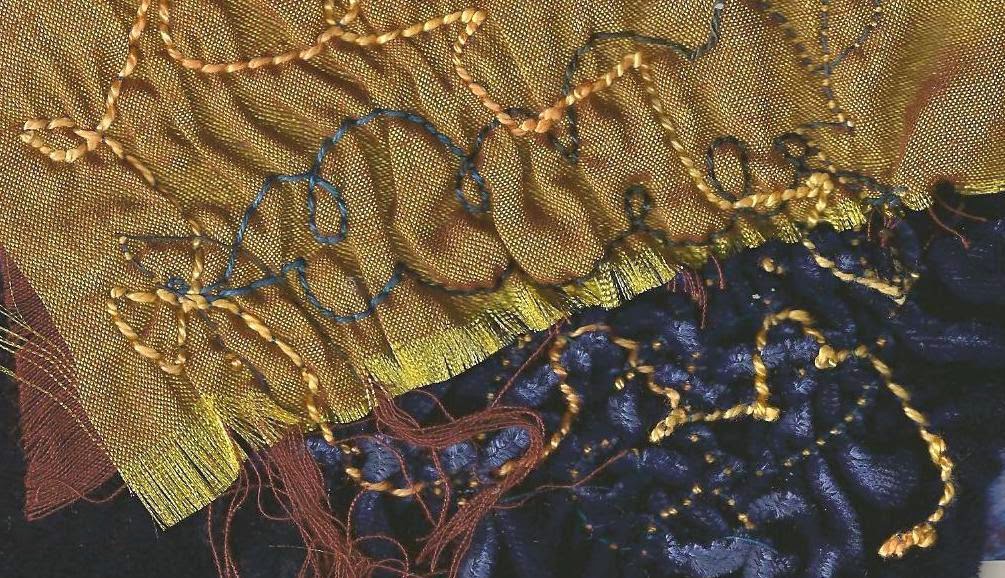
Ideas for some more design detail had been done in earlier chapters- particularly 4 and 5 but while going through samples found a small unfinished section, see below, which was started a few years ago after a workshop with Pauline Verrinder - it is for a necklace encrusted with bead wraps, in the Fibrefusion book Evolutions.  Adding to the original piece thought it could be used to provide a more textured cording detail - think it needs the beads and a bit more twist and fray.
Ref 3.10.8

Realising I needed to work on fabric rather than paper and as a full mask rather than small samples wanted to consider  
TEXTURE, DIMENSION, SURFACE Experiments 
  • first experiment I used machine stiching as design feature and possible support for wires.  OOPS initial idea was to put design on stitch and tear. First attempt rather wobbly. 
  • Next attempt put in twin needle the line wasn't wide enough, would need to get wider twin needle
  • and then forgetting that I was stitching on reverse had a zigzag stitch on the front. Maybe I was trying too many new techniques, where previous ones in Chapter 4 had provided succesful.  Back to drawing board...
The other aspect that had became apparent was that the fabric needed to take both the weight of details on the body of the mask and also, where the design went off the mask. Then overwhelmed by the number of shapes, designs  and texure options  I said to myself cut it out, calm down!!! 
 Ref 3.10.9
But that in itself started me thinking - could cutout work be a solution- using covered wire on the braids and coils to draw the design and make more openings to emphasis the line . I could  use the colour idea shown in 3.10.7 as a background 'wash' that would 'edge' the braids, coils and beading? Could there be merit in this idea as the design would appear to emerge and provide the shape focus, this would allow the mask to be flexible and mould round the face? Would a butterfly appear from the cocoon of wooly, gimpy thoughts? Would this be considered an easy option?  But perhaps time to stop and ask advice!
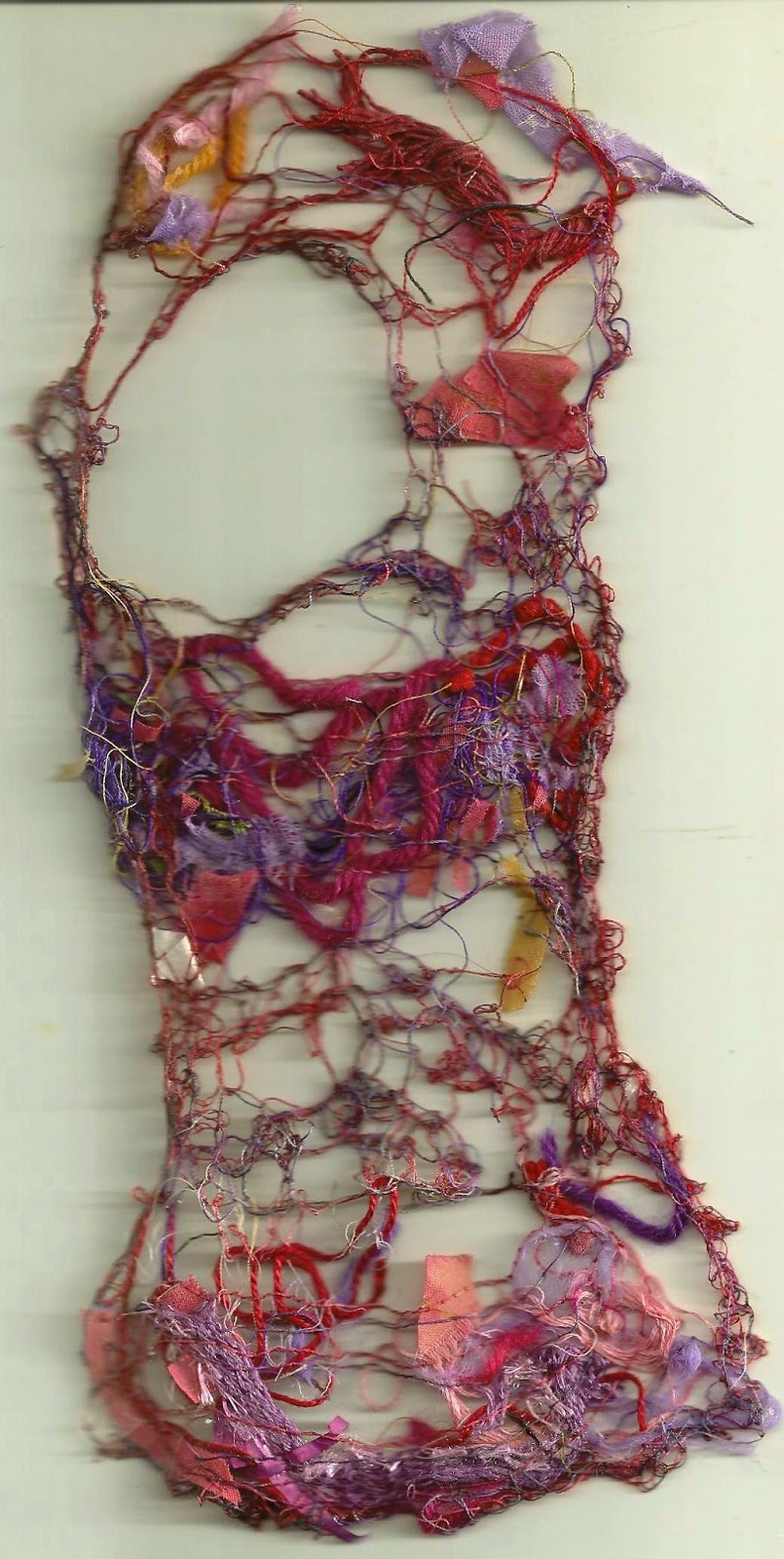
While considering the way forward decided to make a piece of free machine embroidery and play with some ideas and see if the fabric would hold the detail and also give space to add stitch and bead detail.  Although the density of the fabric does hold the wired scrolls it could perhaps do with an additional backing layer for just a bit more support if bead detail is added.  The sample below did however mould well round the face  


Thursday, 21 February 2013

Design an Accessory Part 1

Picture  from Elle France
When reviewing the concept of what makes an accessory I looked to Chapter 12 and selected artist Zandra Rhodes for inspiration.  In looking through her collections I realised that an integral part of her designs was how the models make-up complimented /contrasted with the clothes - could make-up be considered as an accessory?  
Ticking away in my brain over the dark winter months of January and February the Venice Carnival also caught my attention and a seed began to take root, could a mask be considered an accessory?   I had bought a mask, when in Venice in 2007, see left.  I had intended to paint it but just loved its shape and simplicity and did not want to spoil it!   
 In exploring the idea of a mask I needed to work through 3 key exercises in design elements to investigate the choices.
Some design ideas from earlier chapters, see right, were placed on a worksheet to try and maintain focus.


SIZE, SHAPE, SYMMETRY(or otherwise!), SOURCE
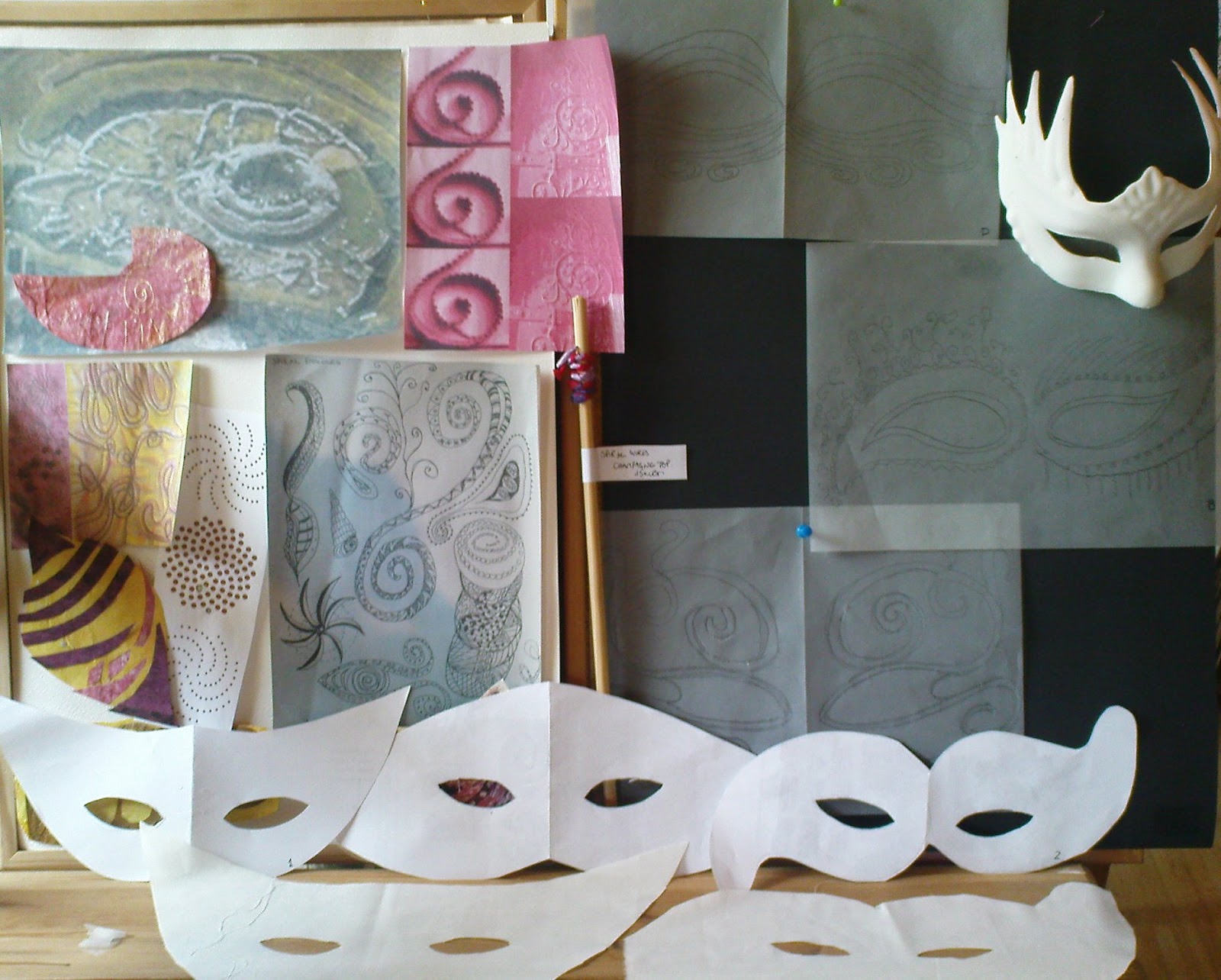
While exploring the mask shape I wanted to be able to have some sense of what was underneath and off the extremities of the mask therefore the mask did not cover the whole face.  The following shapes were cut out:
Ref 3.10.1a                          Ref 3.10.1b
Taking each mask in turn, numbering samples from top left to bottom right, I then took a piece of tracing paper and did some initial design ideas, which had been influenced by shapes that had been used in earlier chapters, and the original inspiration of Zandra Rhodes and Venice.
 Ref 3.10.2a Ref 3.10.2b
 While each design had merits on the original shape the design was made for it then became apparent I could play, moving the tracing paper onto different shapes, this gave a permutation of 36 designs and that was without turning the masks upside down!! While I did not want to make a decision at this time, I felt the need to consider more design elements before making my final design choice, my preference was narrowing down to shapes 1, 2, 4 and 6 and designs B,D,E and  F,  with thoughts that design A was a bit messy and could be improved as an asymmetric option.
TEXTURE, DIMENSION, SURFACE                                                                                        
While textured surfaces of cords, braid, beading would be a part of the finished design it was a key part in the process to establish whether this would be a 2 or 3 dimensional piece.  If it was to be 3 dimensional how would this be made? I was not going to be able to simply put a mould over my venetian mask, I need to consider how to add dimension.

Ref 3.10.3.Let the play session begin, a brief flirt with seeing how a mould would work and how this could be replicated by hand. Using smocking stitches to give contour, shown on the left, on the right fine layers of tissue with a muslin surface that was brushed with PVA and then place on cling film and placed on mask. 

Looking through The Art of Manipulating fabric, by Colette Wolff  stimulated me to consider using tucks, Ref 3.10.4,  or darting, Ref 3.10.5, to bring additional dimensions to a flat surface, or to possibly use a technique shown in Janet Edmonds' Three Dimensional Embroidery - vilene and paper machine stitched shapes
                                                        Ref 3.10.4 reverse                       Ref 3.10.4 front
    Ref 3.10.5   

Should the shaping happen before or after the design work had been done?  
  • The smocking, ref 3.10.3 and tucking ref 3.10.4 were easy enough to pull up. Needed to consider whether design should be worked before or after pulling up the shape. Dart seams could be covered by a designed or a space could be left in design to incorporate dart with base fabric, but after initial experiments making darts were the least favoured option, perhaps pleats could be an alternative option! The tucks seemed to offer a good element for shaping and giving a surface That could be embellished through inserting/emphasising cords.
  • The paper and fabric sample, ref 3.10.3 was stiff when dried but a needle could be pulled through.  A thought, could you prick pattern onto surface with a needle to aid process? This was thin tissue and muslin would it work on heavier paper/fabric?
Time to reflect on what fabric could be used; while my fabric stash included silks and cottons that could be dyed and used wanted to consider surfaces that had texture. Previous work on Modules 1 and 2 had left me samples.
Ref 3.10.6                                                         
  Left: threads sewn onto plastic sheet
  Middle: threads trapped in bondaweb sandwich
  Right: threads in chiffon and muslin sandwich with     bondaweb


Ref 3.10.7 For a previous project on bowls I had used soluble fabric to encase threads and connect with machine stitching.  For the mask perhaps it should be worked worked more lightly?                                                                              A more open use of this soluble fabric method using  just machine stitches with no captured items could be a useful feature or perhaps a combination of the two!
                                                              Ref 3.10.8a                                                Ref 3.10.8b
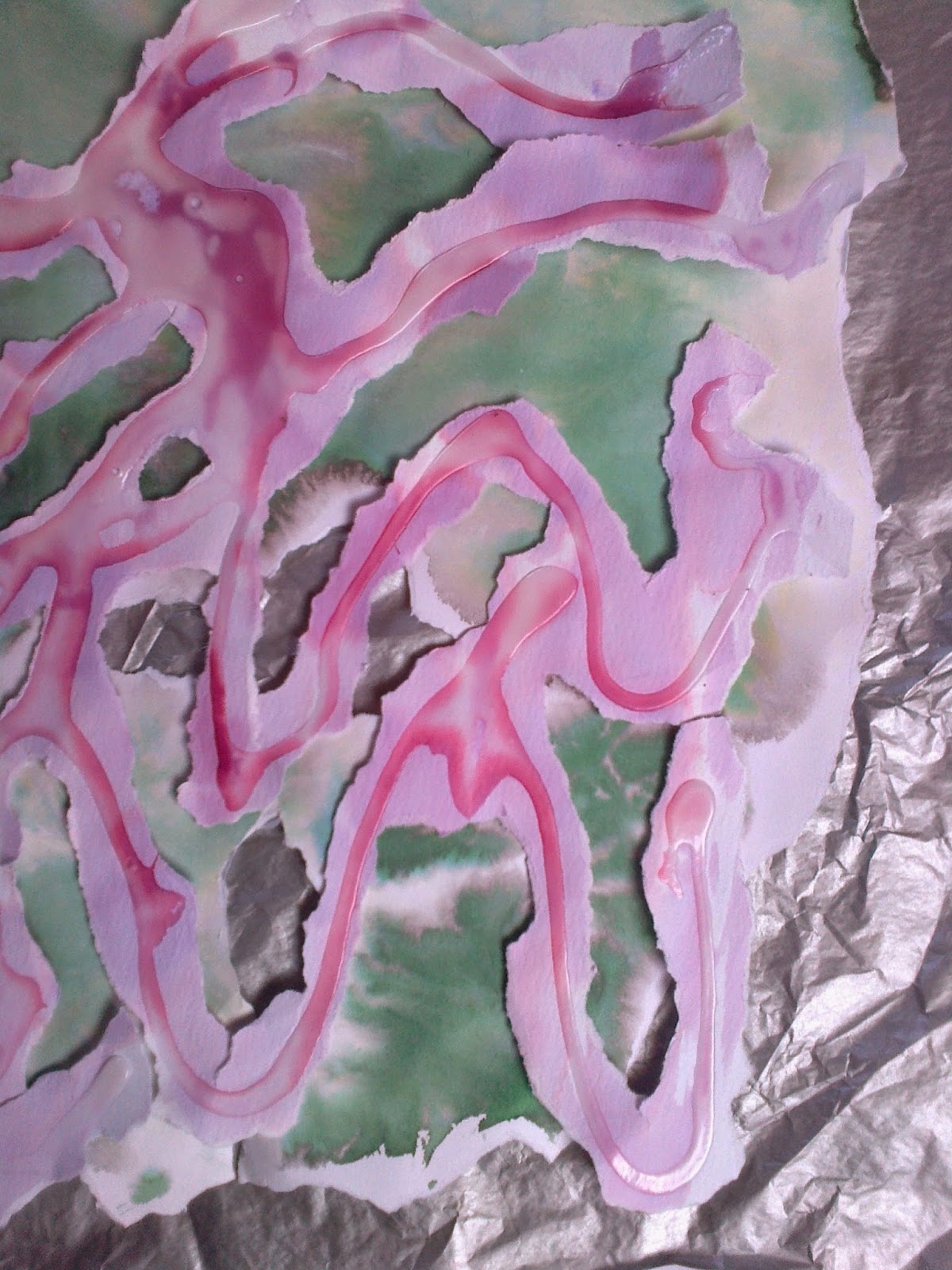
While considering surfaces I had a play with marbling on paper and fabric and also revisited the idea of bleach to make lace pattern on tissue paper and cotton. The marbling was more subtle on the reverse of the paper and fabric . If this was a look I wanted to have as a background for stitching  there would be a need to use a lighter touch with the quantity of colour!
Ref 3.10.9a                                                    Ref 3.10.9b

COLOUR, DETAIL
Ref 3.10.10a                                                                                                                                       Ref .3.10.10b
As a preliminary sketch for Sian I had identified the colours that I was considering, violet/pink to yellow/green moving across the mask. I felt this would give greater dramatic effect than if I worked it horizontally. 
The colour board on right was made when I found this rather Rococo image and while I mused on the bright sheen of papers at the top my thoughts were more for a pastel theme from the colour charts at the bottom with areas of  intensity of colour.
And now to consider each of these design elements and to come up with a short list! Details to be included in the final piece will be decided when the final shape is selected.  It will be important to ensure there are  areas where there is not too much detail to detract from the shapes and to consider what happens at the edges of the mask and how to bring a touch of drama to the piece.  The next act of play is about to begin!